

Why Iran's New Supreme Leader Could Rewrite the Nuclear Fatwa
Analyst Amaresh Misra argues that Ayatollah Mojtaba Khamenei's succession, and Iran's retaliation across the Middle East, have left Washington's war aims unraveling eleven days in.
Contents · 9 sections

A Fatwa That Could Fall
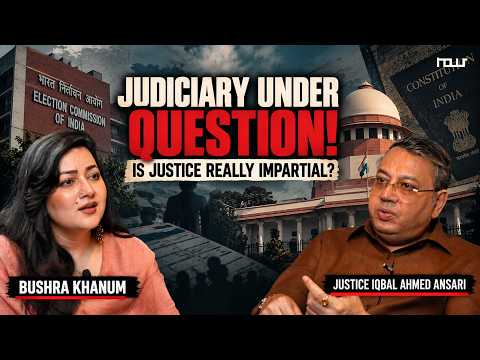
When Ayatollah Mojtaba Khamenei was named Iran's Supreme Leader following his father's reported death in the opening strike of the Iran-Israel-US war, the succession carried a technical detail that analyst Amaresh Misra considers pivotal: the younger Khamenei is not personally bound by the fatwa his father, Ayatollah Ruhollah Khomeini, issued declaring nuclear weapons contrary to Islamic principle. Speaking to Nous Podcast host Bushra Khanam Fahad eleven days into the war, Misra argued that Islamic jurisprudence permits exceptions to such rulings where a state's existence is under threat — meaning a new Supreme Leader could, in principle, reverse the ban.
That possibility, Misra said, is what could most alter the war's course. Either the acquisition of a nuclear weapon or a declared intent to build one, he argued, would be enough to force a change in calculation from Washington and Tel Aviv, who he believes have so far miscalculated badly in confronting Iran.
Misra framed the succession itself as part of a wider generational turnover inside Iran's security establishment, with significant losses reported among the Islamic Revolutionary Guard Corps and the Basij militia as well as the political leadership — replaced, in his telling, by a younger cohort with direct combat experience from the Iran-Iraq war.
The Miscalculation
Misra's account rests on a central claim: that the strike which opened the war killed Ayatollah Ali Khamenei along with much of Iran's senior clerical and military leadership, and that Washington had bet the loss of that leadership would tip the country into civil war and allow the installation of a compliant government. This is Misra's own characterization of events, not an independently confirmed account, but it is the premise he returns to throughout the conversation to explain why, in his view, the war has instead gone badly for its instigators.
In the roughly eight days before the interview, he said, Iran's retaliation destroyed a significant part of the US air-defense network stationed in the region, forcing American forces to draw down their newer PAC-3 interceptor stock for the older PAC-2 — a shift, he argued, with consequences well beyond the Middle East, since it left European allies buying American Patriot systems for Ukraine unable to secure supply. He said Poland has since turned to South Korea for arms instead.
Iran's Hand at the Strait of Hormuz
Misra tied the military picture to an economic one. Gulf oil producers have cut output, he said, while Iran restricts tanker passage through the Strait of Hormuz to vessels from China and Russia — a squeeze he said pushed Brent crude from around $70 to roughly $110 a barrel within ten days. He noted India's roughly 40- to 45-day reserve cushion and its access to discounted Russian oil, but said European buyers facing a separate threat — Vladimir Putin's suggestion that Russia could halt gas exports to Europe well before a 2027 contract expires — have no comparable buffer.
What Israel Isn't Showing
Misra spent much of the interview describing what he called a deliberate Israeli effort to conceal the war's toll on its own population, saying foreign journalists have been barred from filming inside the country and that a communications blackout has kept most footage of the damage from reaching the outside world — a censorship regime he contrasted with Iran's decision to let its own strikes be broadcast. He put the officially acknowledged Israeli death toll at roughly 1,000 but cited unnamed Western independent analysts estimating actual military deaths at five to ten thousand, concealed, he claimed, through the informal recruitment of low-income soldiers — some, he said, from Africa — whose deaths go officially unrecorded.
He also referenced then-unconfirmed reports that Prime Minister Benjamin Netanyahu's brother had been killed in a strike on the family residence, and said senior ministers Itamar Ben-Gvir and Bezalel Smotrich had not been seen publicly in over a week. Misra described scenes of panic at Ben Gurion Airport, with long queues demanding evacuation and reports of private operators charging steep prices for seats on flights out of the country.
Weighing a Ground Invasion
Asked whether a US ground invasion was likely, Misra said it could not be ruled out but argued Washington was instead debating narrower special-operations options: a raid to seize Iran's enriched uranium stockpile directly, which he called an operation without real historical precedent, or an attempt to seize Kharg Island, the heavily defended center of Iran's oil exports, rather than move against the country as a whole. He was skeptical either would succeed, citing repeated statements from Iran's Foreign Ministry that the country is prepared for a ground assault, and pointing to the failed 1980 US hostage-rescue mission as a cautionary precedent.
Moscow and Beijing, Working Quietly
Misra credited Russia with supplying what he called crucial human intelligence that let Iranian forces track American soldiers who had relocated from bases under fire to hotels and residential buildings — including, he claimed, a strike on a Dubai Marina residential tower that killed no civilians despite hitting a floor where US soldiers were staying. He attributed a separate strike on Sdot Micha, an Israeli facility he described as housing nuclear-capable Jericho III missiles, to Chinese electronic-warfare support. Washington and Israel, he argued, now understand they are contending not just with Iran but, indirectly, with both Russia and China.
Hezbollah's Comeback, and the Houthi Threat Held in Reserve
On Lebanon, Misra said Hezbollah — weakened by the earlier killing of its senior leadership — has resumed strikes south of the Litani River since March 2, inflicting what he estimated at two dozen or more Israeli casualties and halting a helicopter-borne Israeli incursion that had expected the area to be empty. He described Iran treating Hezbollah, the Houthis and Hamas as allies rather than proxies, with Yemen's Houthis, in his account, holding fire at Iran's request while retaining the capacity to strike Israel directly if a ground operation begins. Hamas, he said, remains quiet under the existing Gaza truce, though he did not expect that calm to hold indefinitely.
A Warning About Al-Aqsa
Misra addressed warnings — including from commentator Tucker Carlson — that Israel might stage a false-flag attack on Al-Aqsa Mosque to widen the war further. He said he would not put such an operation past Israel, pointing to a pattern of unclaimed regional strikes he said were later traced back to it, but argued that Arab and Muslim public opinion already favors Iran to a degree that would make such an operation backfire rather than help Israel's position.
Who Is Setting the Terms
He was careful to note that verifying any of this from outside Iran is difficult: independent confirmation of casualty figures on both sides has been scarce, official Israeli and American statements have shifted repeatedly as events unfold, and claims from Iranian-aligned sources have not been independently corroborated.
Misra ended by arguing Tehran has ruled out negotiations altogether, on the reasoning that earlier talks yielded nothing, and that it is now Iran — not Washington or Tel Aviv — dictating the terms on which the war might end. His account, delivered eleven days into the conflict, rests on claims — chief among them the reported death of Iran's Supreme Leader — that remained unconfirmed outside Iranian and allied media at the time he made them.


Discussion
0Readers only · Comments are reviewed by the desk before they appear
The journalism is free for everyone — create a free account to join the discussion.