

The RSS Never Said "Quit India" — So Why Are Muslims Asked to Prove Their Patriotism?
A historian traces Muslim participation in India's freedom struggle, from the 1857 uprising to the Quit India movement, against the record of the organisations now questioning it.
Contents · 5 sections

A Question Turned Back
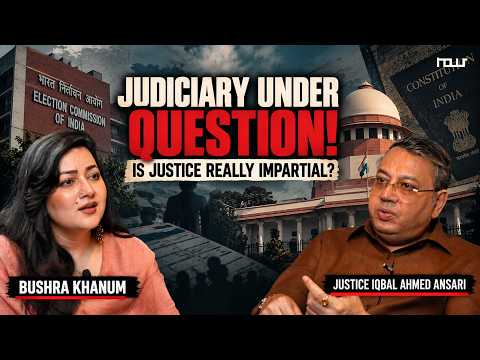
When Muslims are told today that they are not patriots, that they do not love India, a historian interviewed on the anniversary of the Quit India movement has a blunt response: stop answering, and start asking. "Ask the RSS members and those Hindutva proponents who are raising this question: what role did you play in India's freedom?" he said, noting that the RSS was formed in 1925 and the Hindu Mahasabha even earlier — well before most of the freedom movement's defining campaigns.
The speaker, whose name was not given in the source material, describes himself as working from primary documents on Muslim participation in the independence struggle. The interview was recorded on the 84th anniversary of the Quit India movement, a coincidence he uses to frame his argument.
Who Actually Said "Quit India"
His case rests on a simple sequence: the Non-Cooperation Movement, the Khilafat Movement, the Salt Satyagraha, and finally Quit India in 1942 — the campaign that, under the joint leadership of Mahatma Gandhi and Maulana Abul Kalam Azad, told the British to leave. "The RSS did not raise this slogan. The Hindu Mahasabha did not raise this slogan," he said. Those who did, in his account, included Azad, Subhas Chandra Bose and Sardar Patel — all figures associated with the Congress, not with the Hindu nationalist organisations now questioning Muslim loyalty.
The habit he objects to, he says, is a one-way interrogation: Muslims are repeatedly asked to account for their loyalty, and rarely push back with the same question. "We must ask counter-questions," he said — specifically about what the RSS and Hindu Mahasabha were doing during 1942 and the string of movements that preceded it, rather than simply supplying an answer each time patriotism is challenged.
What the RSS's Own Paper Said About the Tricolour
He turns the same scrutiny on a more recent symbol: the tricolour flag that Muslims are now urged to fly to prove their nationalism. He cites an English-language editorial published on August 14, 1947, arguing that the flag would never be respected by Hindus because the number three was inauspicious — "the word 'three' is an evil," as he quotes it — and that it would produce a harmful psychological effect. The people now demanding the flag be embraced without question, he argues, are the political descendants of those who dismissed it at independence.
Different Muslims, Different Choices
The historian is careful to distinguish between Muslims who backed the British and those who fought them, rejecting what he calls the flattening habit of speaking of "all Muslims" as a single bloc. Some Muslim-ruled princely states, he says, collaborated with the British just as some RSS- and Hindu Mahasabha-linked figures did — and, in his account, both the Muslim League and the Hindu Mahasabha trace their organisational roots partly to that same collaborationist current.
He points to Subhas Chandra Bose's Indian National Army as a counter-example: an armed movement that included Hindus, Muslims and Sikhs, with two Muslim officers among its senior commanders. Bose, he notes, deliberately replaced the slogan "Vande Mataram" with "Jai Hind" once he recognised how divisive the earlier phrase — drawn from a novel depicting violence against Muslims — had become. He also references meetings between V. D. Savarkar and Muhammad Ali Jinnah, in which Savarkar reportedly told Jinnah the two men's political projects were closely aligned.
The Ledger from 1857
Pushed further back, to the 1857 uprising, the historian says the record is even starker. Citing official data putting India's Muslim population at roughly 25 percent, he says Muslims nonetheless accounted for around 40 percent of those martyred in that revolt — evidence, in his framing, of a disproportionate share of the earliest sacrifice against British rule. "There isn't an inch of this country that they haven't drenched with their blood," he said of Muslim participation across both 1857 and the later movements of the twentieth century.
His closing point returns to the present demand for proof of loyalty: those asking Muslims to name a single freedom fighter from their community, he argues, should first answer the same question about their own organisations — whose founding generation, on his account, spent the freedom struggle governing alongside the British in Sindh, Bengal and the North-West Frontier rather than resisting them. Both the Muslim League and the Hindu Mahasabha, he adds, drew later recruits from the same pool of princely states that had served the British as agents after 1857 — a shared origin he says gets left out whenever loyalty is put up for debate along religious lines alone.


Discussion
0Readers only · Comments are reviewed by the desk before they appear
The journalism is free for everyone — create a free account to join the discussion.