

The Caller ID That Turned a Police Stop Into a Communal Beating
Two sisters who are journalists in Delhi say a routine detention near a VIP hospital visit turned violent the moment an officer saw the name "Mohammed Khan" flash on a phone screen, a case that is now testing whether the capital's police can be held to account for identifying and punishing citizens by religion.
Contents · 9 sections
- A Neighborhood Made Spotless, and the Questions That Followed
- A Ride Home That Became a Detention
- "Accha Muslim Hai": The Moment the Assault Turned Communal
- Inside the Locked Room
- Tea, Cold Drinks and a Sudden Change in Tone
- A Familiar Pattern for Muslim Journalists in Delhi
- Forty-Eight Hours, No FIR
- Two Careers Built on Asking Uncomfortable Questions
- What the Case Is Really Testing
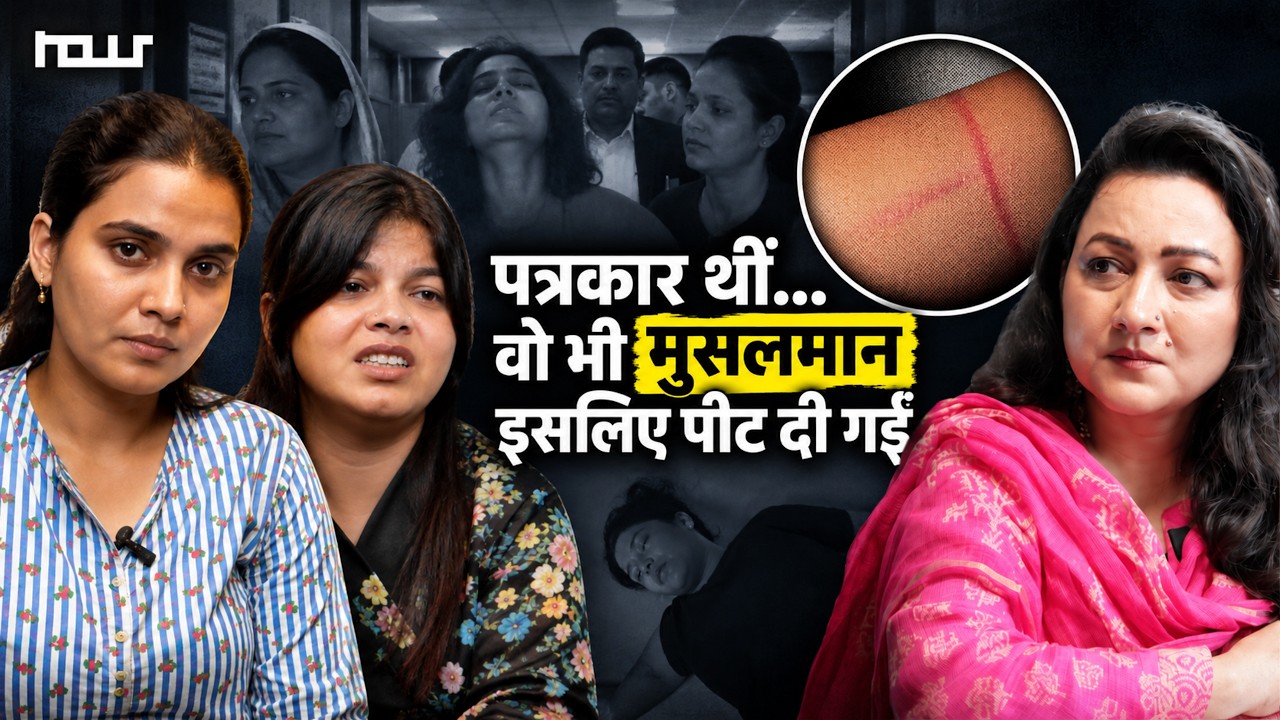
It was not the beating that broke something in Shaheen Khan. It was a phone call. Inside a room on the upper floor of Saket police station in south Delhi, an officer who had just wrenched a phone out of her hand sat down to catch her breath. A call lit up the screen. The caller had been saved in the contacts as Mohammed Khan. Shaheen Khan says the officer's body changed before she said a word: she stood up, looked at the screen, and declared that the woman in front of her was Muslim, and that she would now be beaten harder. What had been, until that point, an unlawful detention escalated, in the sisters' telling, into a targeted assault carried out with religious slurs and a police baton sent for specifically for the purpose.
Shaheen Khan and her younger sister Nafeesa Khan, both journalists, gave their first detailed account of the incident on Naaz Network, a show hosted by Bushra Khanam Fahad, days after India's Independence Day celebrations in mid-August and roughly 48 hours after the episode itself. Their allegation is straightforward and severe: that Delhi Police officers detained them without cause, assaulted them inside a police station, and intensified the violence once they established, from a name on a screen, that the two women were Muslim. No FIR had been registered against any officer by the time the interview was recorded. What follows is drawn entirely from the sisters' own account, given at length and under emotional strain, of a day that began with a scooter ride home and ended in a locked room.
A Neighborhood Made Spotless, and the Questions That Followed
Shaheen Khan is a local reporter who covers Malviya Nagar, the south Delhi neighborhood where she and Nafeesa live. On the day in question, the two were riding back from the gym on a scooter, Nafeesa having promised her sister juice on the way home, when Shaheen noticed something odd: streets that were usually chaotic and poorly maintained had been suddenly cleaned and decorated. Asking around, she learned that the Delhi chief minister and Union Home Minister Amit Shah were arriving nearby to inaugurate a private facility, Max Hospital. As a local journalist, she felt the contrast was worth recording. Why, she asked in her video, could roads be cleared and hospitals dressed up only when senior officials were due, while government hospitals a few streets away sat in permanent neglect. She also raised, on camera, questions about women's safety, referencing an assault case then in the news, and asked why the Home Minister was not answering questions being pressed on him nationally about earlier police violence against young people.
Shaheen says she coordinated with traffic police as she recorded, explaining that she was a working journalist and being told, by officers who recognized her, to go ahead. She parked the scooter to the side of the road, away from the hospital premises, and shot a short video beside a cutout advertising the event, questioning why a private hospital was receiving so much official attention. Security guards at the hospital gate objected and tried to stop her from filming near the hoarding. Nafeesa, who had no idea what was about to happen, was sitting nearby. Shaheen insists neither of them ever entered the hospital grounds or obstructed the VIP movement; they were, in her words, standing on a public footpath doing a piece to camera, the way she does most days.
A Ride Home That Became a Detention
As the sisters were preparing to leave, police officers approached and tried to seize their phones. When the sisters asked what they had done wrong, they were told to get into a police vehicle. Shaheen says she repeatedly identified herself as a journalist and explained they were simply riding home; the police, she says, then called in female constables who grabbed the sisters' arms and legs and forced them into the van, touching them in a way Nafeesa objected to on the spot. What troubled Shaheen most, she says, was what happened next: the van did not head toward their home, despite passing directly by it. Twice, she recalls, their house came into view and she asked to be let out, and twice the vehicle continued on. Assured that they were being taken home "under Delhi Police's safety," the sisters instead found themselves outside Saket police station, a station that is not the one that covers their own neighborhood.
Shaheen says she initially stayed calm, reasoning that the police would ask a few questions, check the CCTV footage of the street, and let them go, given that as journalists they intended to cooperate fully. That calculation changed within minutes of walking into the station.
"Accha Muslim Hai": The Moment the Assault Turned Communal
At the reception desk, an officer demanded the sisters hand over their phones. Shaheen refused, asking under what law or authority the demand was being made, and was told to wait in the lockup room, a request she also refused, pointing out that lockups are for people accused of crimes, not for journalists. The station's SHO, identified by the sisters as Dinesh Kumar, arrived and, in Shaheen's account, stared them down with open contempt before ordering that they be locked up and that enough FIR sections be applied against them that neither would recover. Other male officers reportedly mocked their profession, telling the sisters they had no idea what journalism even meant. One jab stung in particular: an officer sarcastically likened Nafeesa to P. T. Usha, the Olympic sprinter and a symbol of Indian women's achievement, as an insult rather than a compliment.
The confrontation escalated when a woman constable, whom the sisters describe as being dressed in pink, forcibly snatched Shaheen's phone at the open reception area, in view of the station's own CCTV cameras, and slapped both sisters in quick succession. Even then, according to Shaheen, the sisters kept resisting verbally, refusing to be intimidated, until the same officer sat down for a brief rest with the seized phone in hand. That was when the call from a contact saved as Mohammed Khan appeared on the screen. Shaheen Khan recalls the shift in a phrase she has repeated since: "Accha Muslim hai, Musalman hai." She says the officer immediately declared she would now hit them harder, and did.
Nafeesa Khan, even as blows continued to land, told the officer plainly that her religion was not a crime. "Main Musalman hoon. Kya yeh koi crime hai?" she says she asked. Her point, made repeatedly through the encounter, was that a police officer's duty under the Constitution makes no distinction between citizens on the basis of faith.
Inside the Locked Room
What the sisters describe next is a sustained assault lasting, by their estimate, between thirty and forty minutes. They say they were dragged up a staircase, thrown to the floor of an upper-floor room, and beaten with hands, feet and, eventually, a wooden baton that the assaulting officer sent a constable outside to fetch. Shaheen says the baton was brought down repeatedly on her legs, leaving visible swelling and discoloration, while Nafeesa was struck across her back and legs and had her hair pulled. Both allege they were called by communal slurs during the beating and repeatedly told that their profession and their questions had brought this on themselves. Requests for water were initially refused, with the officer reportedly telling them she would let them go thirsty instead, before a fellow constable eventually intervened with a glass of water partway through.
Shaheen recounts trying, at one point, to break free and reach the room of the officer she believed was in charge, only to find him unmoved by her pleas for help; he neither called off the assault nor asked questions, she says, and gestured for the constable holding her to take her back inside. Throughout the ordeal, she says, one line was repeated to them by several officers: that Delhi Police had "power," and that filming a minister and asking questions amounted to obstruction. As her own strength gave out, Shaheen says the only words she could form for hours afterward, in the police van, the hospital, and back at the station, were three: Muslim, Muslim, Muslim.
Tea, Cold Drinks and a Sudden Change in Tone
The assault eased only once Nafeesa's condition visibly worsened. According to the sisters, the SHO then reappeared, this time addressing them as "beta," offering them water, tea and a cold drink, and telling them not to worry, that they would be dropped home safely. Shaheen says she refused every offer and pointed to her sister's injuries, asking how a father figure could watch his children beaten over their religion and then offer refreshments minutes later. The SHO, in her account, responded only with repeated, noncommittal apologies, saying the department accepted it had erred, without committing to any accountability.
Left largely alone in the room with a single constable guarding the door, the sisters seized their moment when that officer was distracted by an incoming phone call. Nafeesa, unable to walk unaided, was half-carried by Shaheen down several flights of stairs. By the time they reached the reception area, Nafeesa collapsed. Shaheen says she was still denied use of a station phone to call home, and only after warning staff that they would be held responsible if her sister's condition worsened was she allowed a brief call. Family members and colleagues, alerted through the emergency helpline and word of mouth, began arriving at the station soon after.
A Familiar Pattern for Muslim Journalists in Delhi
Both sisters situated the incident within a longer pattern rather than treating it as an isolated failure. Shaheen recalled the anguish of watching, months earlier, Delhi Police crack down on young people and students on July 20, an episode she says came back to her vividly as she was being dragged up the station stairs. Nafeesa described being told, years earlier while reporting near Chandni Chowk, to go to Pakistan because of her name, an incident her former employer, 4 PM News Network, publicly backed her over at the time. Both invoked the state's continued detention of the journalist Siddique Kappan, who spent years in jail before his release, as well as the prolonged incarceration of the activists Umar Khalid, Sharjeel Imam and Gulfisha Fatima, as evidence that Muslim citizens who report or protest face disproportionate legal jeopardy in Delhi.
Shaheen also drew a direct line to an earlier professional milestone that, she believes, made her recognizable to at least one officer at the scene. Three months before the assault, she was the first reporter at the site of a fire in an illegal hotel in her area that killed 23 people, an episode during which her visibly distressed, on-camera criticism of the administration's slow emergency response went viral. She believes that reputation, as a reporter unafraid to confront local authorities, made her a known and disliked figure well before the day of the assault.
Forty-Eight Hours, No FIR
By the time of the interview, the sisters said, no First Information Report had been registered against any of the officers involved, despite Delhi Police having reportedly posted, and then deleted, a tweet describing the sisters as having violated VIP protocol and broken the law. Shaheen calls that deleted post a kind of confession: an acknowledgment, made and then hastily withdrawn, that officers were aware their conduct required a public justification. She and Nafeesa are demanding two concrete steps, an FIR against the officers involved and the immediate suspension of the SHO and the constable they say led the beating, arguing that the department's public statements of regret mean nothing without both.
The sisters used the interview to appeal directly up India's political chain: to Prime Minister Narendra Modi and Home Minister Amit Shah, under whose authority the Delhi force operates; to the Delhi chief minister, whom they noted governs a capital that promotes itself as a model of development while unable to secure basic accountability inside one of its own police stations; and to opposition leaders Rahul Gandhi and Priyanka Gandhi, whose past statements on standing up to power the sisters said had shaped their own resolve not to be intimidated. Congress MP Imran Pratapgarhi, who heads the party's minority affairs wing, met the sisters and pledged support, which they welcomed. They were notably sharper toward prominent women on the other side of the aisle, naming BJP leaders Smriti Irani and the actor-turned-parliamentarian Kangana Ranaut and asking why women who have positioned themselves as champions of women's dignity had said nothing. They leveled a similar charge at well-known television anchors Anjana Om Kashyap and Rubika Liyaquat, pointing out that fellow women journalists who regularly debate women's issues on air had not so much as acknowledged the assault.
Two Careers Built on Asking Uncomfortable Questions
The sisters come from what they describe as a progressive, education-minded Muslim family that never treated them differently for being daughters rather than sons; their father, they said, has always called them "beta," the term more commonly reserved for sons, and their mother, though not highly educated herself, is remembered by both as the source of their refusal to back down. Shaheen has worked as a reporter with 4 PM News Network for close to three years, covering her own neighborhood's civic failures, and says her editor, Sanjay Sharma, arrived at the police station still recovering from a fall himself and has since spoken publicly, including at a press conference, describing the assault as an attack on the profession and on a religious minority. Nafeesa previously worked at the same outlet before going independent; she now runs her own YouTube news channel, Aman Sandesh, meaning "message of peace," and describes herself, half in jest amid the interview's heavier moments, as open to work once she has recovered and received justice.
Two days after the assault, when the interview was recorded, Nafeesa was still visibly struggling to sit through the conversation, repeatedly straightening an injured leg on camera. Shaheen, describing her sister's composure throughout the ordeal, said watching Nafeesa in pain and still refusing to be silent was the moment she felt proudest and most afraid at once.
What the Case Is Really Testing
Stripped of its individual details, the sisters' account raises a question that goes well beyond one police station: whether officers of the state can, in practice, treat a citizen's religious identity as grounds for harsher treatment, and whether the political and media establishment will treat that as a scandal or as background noise. Shaheen Khan framed her own defiance in constitutional terms throughout the interview, insisting that no officer swearing an oath to the Constitution has the authority to identify a citizen's faith before deciding how much force to use. Both sisters said the viral videos of their ordeal, and the international press attention that followed, had already achieved something the assault was meant to prevent: pulling an episode designed to stay behind closed doors and locked cameras out into public view.
As the episode closed, host and guests together repeated a single phrase three times: Jai Samvidhan, hail the Constitution. It was less a slogan than a statement of the terms on which Shaheen Khan and Nafeesa Khan say they intend to keep working: as journalists, as sisters, and, they were each careful to say, without ever hiding being Muslim again.



Discussion
0Readers only · Comments are reviewed by the desk before they appear
The journalism is free for everyone — create a free account to join the discussion.