

 2:30
2:30Video· Nous Shorts
Ottoman Caliph: What Happened After 1924?
“He embodied all the complexity and contradictions of the late Ottoman experience.”
2:30“He embodied all the complexity and contradictions of the late Ottoman experience.”
 1:47
1:47“I Will Protect Mosque & Temple Both”- MP Imran Masood
 1:04
1:04Aakar Patel examines how public mobilisation can shape government decisions—from the protests against the NRC and farm laws to the question of institutional accountability.
 1:11
1:11Journalist Dayashankar Mishra examines the implications of Umar Khalid’s prolonged incarceration and the Supreme Court’s handling of his bail plea.
 2:20
2:20Saharanpur MP Imran Masood responds to criticism over his handling of recent tensions in Saharanpur following mosque demolition.
 1:44
1:44Muslim societies face an intellectual crisis: Is it a departure from Islam, or a need to reconstruct Islamic thought for modern realities?
 0:49
0:49“There is so much money in skill development.”
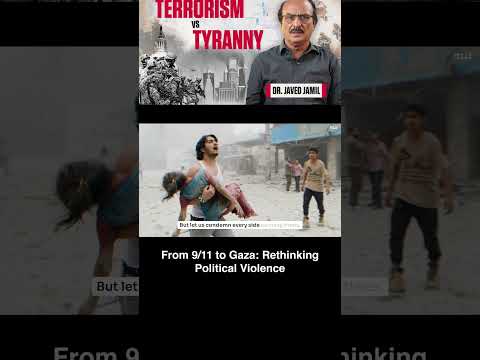 2:01
2:01Terrorism isn’t born in a vacuum—it is fueled by injustice, exploitation, and tyranny.
 1:04
1:04“The fight is for the law. We have to fight for the law—and we will win.”
 2:22
2:22Dr Waris Mazhari examines Muhammad Iqbal’s attempt to engage Islamic theology with modern philosophy and science.
 1:43
1:43Aakar Patel discusses India’s global image, secularism and the gap between political rhetoric at home and its projection abroad.
 1:53
1:53“In my view, the biggest question facing the judiciary today is fear.” - Justice Iqbal A Ansari
 2:44
2:44Dr Harish Wankhede from JNU examines how cinema participated in the nation-building project, reflected the Gandhian-Nehruvian consensus, and addressed questions of socialism, secularism, agrarian crisis and social justice.
 2:22
2:22“You can’t remove 25 crore Indians from the country.”
 1:24
1:24MP Ruhullah Mehdi explores justice, peace, promises and constitutional commitments in Islamic thought.
 1:48
1:48Prof Abusaleh Shariff examines the Sachar Committee Report, the power of data, and the political significance of statistics in understanding India’s Muslims.
 2:25
2:25Dr. Harish Wankhede examines Ambedkar, Dalit politics, Buddhism, caste, representation, cinema, and the future of the Dalit movement.
 1:57
1:57“It is a political agenda. There is nothing else.”-Imran Masood
 1:11
1:11Imran Mulla explores a neglected, cosmopolitan history spanning India, Turkey, Jerusalem, France and England—and what it reveals about global Muslim politics.
 1:30
1:30“Police's uniform is not above the Constitution.”
 0:47
0:47“It’s the only country in the world where you actually tax someone on the basis of the family, not the individual.”
 1:23
1:23“We will not find an example that goes against our tradition.”
 3:00
3:00“Terrorism cannot be understood simply at the local level.”
 1:12
1:12“SIR is a wolf in sheep’s clothing.”
 0:43
0:43“They believe that they have no future.”
 2:31
2:31“We had been slapped and beaten for so long. We had to save our lives.”
 1:44
1:44“Ijtihad is not simply limited to whatever has already been said within the four schools of thought.”
1:44“Ijtihad is not simply limited to whatever has already been said within the four schools of thought.”
 1:10
1:10"Elections are not a celebration—they determine who will shape your future for the next five years."
1:10"Elections are not a celebration—they determine who will shape your future for the next five years."
 0:55
0:55“The Indian Muslims had nothing to do with the Muslim rulers.”
0:55“The Indian Muslims had nothing to do with the Muslim rulers.”
 1:28
1:28“The task of thinking alternatively has become all the more challenging.”- Prof Irfan Ahmad
1:28“The task of thinking alternatively has become all the more challenging.”- Prof Irfan Ahmad
 1:20
1:20"The fundamental structure of Islam is completely broken in his interpretation of the Qur’an.”
1:20"The fundamental structure of Islam is completely broken in his interpretation of the Qur’an.”
 0:55
0:55Why are some middle- and upper-middle-class Hindu voters showing signs of political fatigue with the BJP?
0:55Why are some middle- and upper-middle-class Hindu voters showing signs of political fatigue with the BJP?
 1:33
1:33“The big questions were demanding that the tool of Ijtihad should be brought back.”
1:33“The big questions were demanding that the tool of Ijtihad should be brought back.”
 2:21
2:21“Jihad is a dirty word” — a perception shaped by decades of political and media narratives.
2:21“Jihad is a dirty word” — a perception shaped by decades of political and media narratives.
 2:39
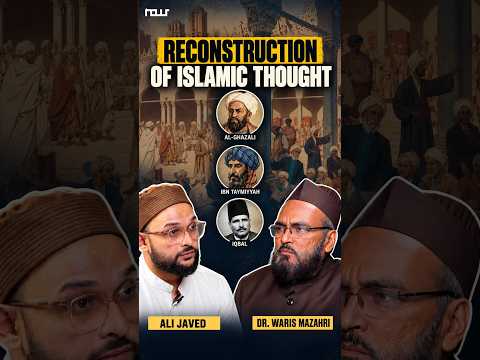
2:39What Does It Mean to Reconstruct Islamic Thought? In a wide-ranging conversation, Dr. Waris Mazhari discusses his new book, Fikr-e-Islami Ki Tajdeed, with Ali Javed, exploring tradition, modernity, ilm al-kalam, madhhabs, Iqbal, Ibn Arabi, and the future of Islamic intellectual thought.
2:39What Does It Mean to Reconstruct Islamic Thought? In a wide-ranging conversation, Dr. Waris Mazhari discusses his new book, Fikr-e-Islami Ki Tajdeed, with Ali Javed, exploring tradition, modernity, ilm al-kalam, madhhabs, Iqbal, Ibn Arabi, and the future of Islamic intellectual thought.
 2:59
2:59Author Imran Mulla explores Global Islam, the Khilafat movement, global news, and how ordinary Muslims connected with the wider world.
2:59Author Imran Mulla explores Global Islam, the Khilafat movement, global news, and how ordinary Muslims connected with the wider world.
 1:50
1:50Dayashankar Mishra examines how the language of Hindutva and debates over Hindu identity have shaped public discourse since 2014.
1:50Dayashankar Mishra examines how the language of Hindutva and debates over Hindu identity have shaped public discourse since 2014.