

Raju Parulekar: The Anna Movement Had an RSS DNA — And a New One Is Copying It
The senior journalist and one-time Anna Hazare confidant tells Nous why he believes the 2011 anti-corruption movement, and the party it produced, trace back to the RSS — and why India's most vulnerable voters should treat the next 'movement' the same way.
Contents · 6 sections

A Friendship That Began Over Pakoras
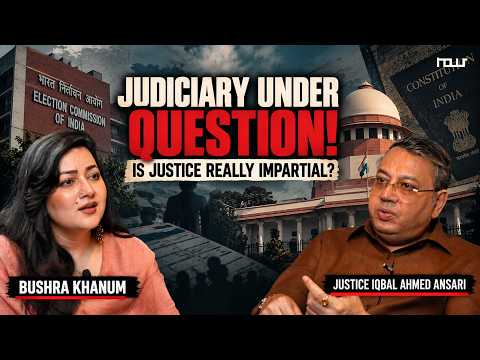
Raju Parulekar has built a reputation as one of Indian journalism's more unsparing critics of power, regardless of who holds it. In conversation with Nous Podcast host Bushra Khanum Fahad, he revisited a subject he returns to often: the 2011 India Against Corruption movement led by Anna Hazare, and his conviction that it was, from early on, an operation with the Rashtriya Swayamsevak Sangh (RSS) working behind it.
Parulekar's connection to Hazare predates the movement by roughly a decade. He first interviewed the activist after Hazare forced the resignation of three Maharashtra ministers through a hunger strike, and a friendship followed. He recalled visiting Hazare's ashram in Ralegan Siddhi often enough that he could date, precisely, the last time he ate a plate of the potato pakoras served there: 30 October 2011. He was not present, however, for the Ramlila Maidan protests that made Hazare a national figure that same year — he was in France for the Cannes television market, he said, at a time when the festival was not yet the tourist draw it later became.
The Core Committee's Falling Out
What pulled Parulekar back into the story, he said, was a phone call from Hazare himself, placed while Parulekar was travelling in Europe. He flew back, made his way from Mumbai to Pune and on to Ralegan Siddhi, and found Hazare frustrated: his voice, Hazare told him, was no longer reaching the public — it was the movement's "core committee," led by Arvind Kejriwal, Kiran Bedi, Manish Sisodia and Prashant Bhushan, that was effectively speaking for him. Hazare wanted that committee dissolved, Parulekar said, though he was talked out of it.
Underlying the rift, in Parulekar's account, was money. India Against Corruption, he said, was never a registered organisation — donations instead flowed into the separate NGOs run by Kejriwal and Bedi, with no unified accounting. Since those NGOs held FCRA registration for receiving funds, Parulekar argued, diverting that money into political activity was itself an offence, regardless of any RSS connection: "They were raising a voice against corruption while committing corruption," he said of the arrangement.
He described the movement's most dangerous moment as the point when Hazare's fast intensified and, in Parulekar's telling, Kejriwal calculated that a martyred Hazare would clear his own path to national leadership. Hazare, alarmed, left the hospital near Ramlila Maidan with the activist Medha Patkar's help and returned to Ralegan Siddhi — a rupture Parulekar said he made public himself, posting a Marathi blog under Hazare's own signature.
Reading the RSS Into the Movement
Parulekar's central claim is that the RSS specialises in occupying political space without ever presenting its own face — he compared the organisation to a shape-shifting demon of Hindu mythology, capable of appearing as a monk, a reformer or, in this case, an anti-corruption crusader. Hazare, he argued, was the movement's public face, but Kejriwal was always its operational head, and Kejriwal's own political biography — beginning with opposition to caste-based reservations that drew protest from students at JNU — shows an ideological throughline to the RSS that predates the movement itself. As evidence of coordination, he said planning for the movement routinely involved BJP leader Arun Jaitley, with Jaswant Singh occasionally present alongside Kejriwal's team.
He drew a contrast between the restraint the Congress-led government showed the movement in 2011 and the aggressive prosecutions AAP leaders face today — including jail terms tied to Delhi's excise policy case — arguing that this apparent contradiction doesn't disprove RSS backing but reflects a falling-out within an aligned camp: "the real fights are between brothers," he said, pointing to the BJP's own treatment of the sidelined party functionary Sanjay Joshi as a precedent. Even under Sheila Dikshit's Congress government, he said, Delhi Police were reluctant to register a case against Kejriwal after a party worker was assaulted in front of a young activist named Swati Maliwal — who later became a BJP Rajya Sabha MP.
A New Party, the Same Playbook
Parulekar extended the same suspicion to a newly formed outfit he referred to as the "Cockroach Janata Party" — a name, he said, that grew out of a public remark dismissing India's unemployed youth as "cockroaches," which the new party's founders adopted as a badge rather than an insult. He noted that its founders are based overseas, that its social media following grew from the low thousands into the millions within a strikingly short window, and that its opening pitch — pledges of austerity, refusals of official cars or bungalows, claims of incorruptibility — echoes both Kejriwal's original messaging in 2011 and, further back, the RSS pracharak's ascetic self-presentation. "History repeats itself — the second time as farce," he told Fahad, urging viewers not to mistake the new party's rapid growth for organic support.
He extended this into a broader argument about what he called "high moral ground" politics: that no serious ethical or political tradition — not the Buddha's middle path, not Kabir, not Guru Nanak, not Hussain ibn Ali — built its authority on claiming moral superiority over others, and that any movement leaning heavily on that posture, whether Kejriwal's in 2011 or a new claimant's today, should be read warily rather than taken at face value.
What the Opposition Keeps Getting Wrong
Turned to opposition strategy, Parulekar offered a three-part prescription for the INDIA bloc: full alignment among its constituent parties, an end to public sniping — his example was criticism of Mamata Banerjee following the Trinamool Congress's setbacks, which he said should be handled privately rather than "at the crossroads" — and the sidelining, though not formal expulsion, of Kejriwal's AAP and the Sharad Pawar–led faction of the NCP, both of which he described as effectively serving BJP interests.
He also disputed the legitimacy of recent opposition defeats in West Bengal, Assam, Tamil Nadu and Kerala, attributing them to the Election Commission's Special Intensive Revision of electoral rolls, which he said struck voters from constituencies where opposition parties were strong, rather than to any organic decline in support.
His sharpest historical claim concerned the Congress party's own record: that its greatest strategic error was not tolerance of the RSS but its role, over decades, in weakening the organised Left — trade unions and farmer and worker federations that Parulekar described as India's political "shock absorber," regardless of whether the Left held office. He pointed to the first UPA government, which depended on the outside support of 83 Left MPs, as independent India's most successful administration for building out welfare provisions, and argued that the Gandhian idea of antyodaya — the upliftment of society's last person — is functionally identical to the socialist idea of proletarian uplift. "Call the welfare state Left if you like," he said. "I'm not a leftist, I'm a Gandhian, but the two words mean the same thing."
"Ten Steps Away"
Parulekar closed with a direct appeal to the groups he said are paying the steepest price for India's current political direction — Muslims, Dalits, Adivasis, farmers and labourers — urging them to stay clear of movements that exist primarily online and instead back leaders rooted in physical, local struggle, whatever their limitations. The way out of what he called a period of political blindness, he told Fahad, does not descend from some distant horizon — it rises from the ground.


Discussion
0Readers only · Comments are reviewed by the desk before they appear
The journalism is free for everyone — create a free account to join the discussion.