

Is a New World Order Emerging From the Iran War? Ghazala Wahab's Reading of 15 Days That Flipped the Narrative
Defence journalist and Force magazine editor Ghazala Wahab argues that Iran's decentralised resistance to the US-Israel war has dented American military supremacy for good — and exposed an India that picked a side too early, for reasons that had little to do with its national interest.
Contents · 9 sections
- A War That Didn't Go to Plan
- Russia, China and the Symbolism of a Supreme Leader's Death
- An Asymmetric War, Read Correctly by Only One Side
- Kharg Island, the Strait of Hormuz, and the Nuclear Question
- Why Boots on the Ground Isn't Coming
- The Gulf Rulers' Real Fear Isn't Iran
- Hezbollah, the Houthis, Hamas — and a Cooling Saudi Relationship
- Unverifiable Claims From Inside Israel
- A New World Order — and India's Place in It
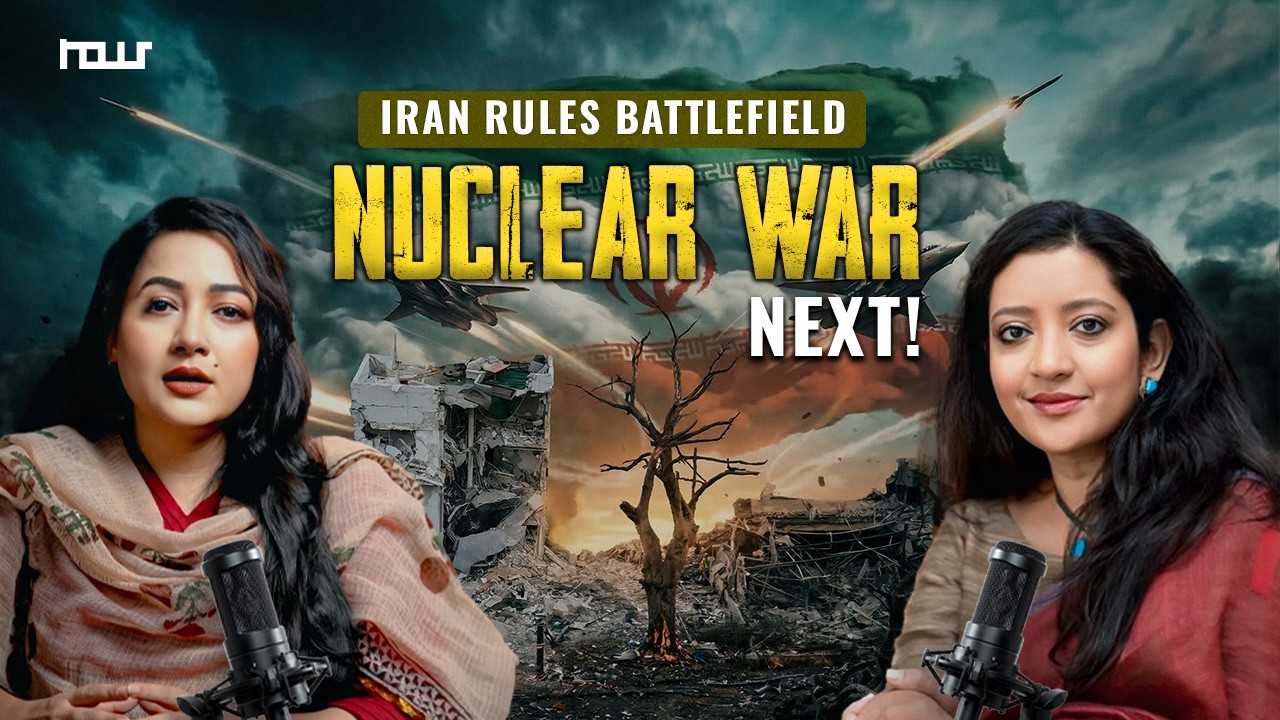
Fifteen days into a war that the United States and Israel launched against Iran, the question dominating the conversation had inverted itself, says Ghazala Wahab, editor of Force magazine, defence commentator and author of books including Dragon on Our Doorstep and Born a Muslim. Where Western coverage once asked how long Iran could hold out, she told host Bushra Khanam Fahad on Nous News Network, it is now Washington and Tel Aviv being asked how long they can sustain the fight — and, in her assessment, the shift is not just rhetorical. Tehran, she argues, is setting the war's narrative, its pace, and increasingly the terms on which it will end, having tabled three conditions for any negotiation: a complete lifting of sanctions, American compensation for the damage Iran has suffered, and a binding guarantee that Washington and Tel Aviv will never again jointly attack it.
A War That Didn't Go to Plan
Wahab's central argument is that the US and Israel badly misjudged what this war would look like, extrapolating from a shorter, twelve-day clash the previous year in which Iran largely absorbed strikes rather than answering them in kind. This time, she says, Tehran had already decided it would not absorb another attack — it would retaliate at full strength — and had spent the intervening year preparing accordingly. Anticipating renewed attempts on its top leadership (Washington and Israel tried and failed to kill Supreme Leader Ali Khamenei in the previous round too, she notes), Iran deliberately decentralised its command structure, pushing real operational autonomy down to mid-level officers so that the loss of senior leadership would not fracture the chain of command — what she calls, borrowing the American term, a “mosaic” defence built around deliberate decentralisation rather than a single, decapitable centre.
The Israeli-American calculation, as she reconstructs it, was that an external air assault on the top leadership combined with internal unrest — capitalising on the anti-government protests Iran saw as recently as this past January — would create a pincer effect: political and military leadership thrown into confusion from outside while ordinary Iranians rose up from inside, forcing the regime to collapse and come, in her words, “quietly” back to the table on American and Israeli terms, or hand over to a government Washington found more agreeable. None of that materialised.
Russia, China and the Symbolism of a Supreme Leader's Death
Two structural shifts and one symbolic one explain the reversal, in Wahab's account. First, Russia and China, which had stayed relatively cautious the previous year — Vladimir Putin had explicitly noted that Israel's population is more than half Russian-speaking, a demographic Moscow was reluctant to endanger — have this time backed Iran openly: militarily, diplomatically and on humanitarian grounds, sharing intelligence, weaponry, and the means to operate it, rather than helping quietly as before. Second, and consequentially, the killing of Ayatollah Khamenei during the fighting — after he made clear he would not go into hiding even at the cost of martyrdom — sharply raised Iran's standing across the Muslim world, cutting through routine Sunni-Shia friction and shifting global opinion, including in Western countries and even the United States, in Iran's favour. That shift in sentiment, she argues, has functioned as a genuine morale boost sustaining Iran's ability to keep fighting.
An Asymmetric War, Read Correctly by Only One Side
Asked to assess where each side now stands, Wahab frames this as a classically asymmetric conflict — Iran does not have the weaponry or sophistication of its opponents, but asymmetry shifts initiative toward the weaker party precisely because its capabilities stay hidden, the way an insurgent force in a jungle war does. She points to the pattern of America's post-war-era conflicts, from Vietnam to Afghanistan, as evidence that overwhelming firepower has rarely translated into the outcomes Washington expected — and argues Iran studied that history for forty years with the US and Israel specifically in mind. In the war's opening days, Iran deliberately fired older, less accurate missiles at Israeli, American and Gulf state air-defence systems simply to exhaust their interceptors — trading a cheap drone-grade missile for the enemy's far costlier interceptor rounds — before switching to its more capable second-tier missiles once those defences were already depleted and exposed.
The Gulf states hosting American military infrastructure — the UAE, Bahrain and Qatar among them — have taken a different kind of damage, in her telling: not primarily to hardware, but to the image of stability, luxury and security their entire economic model is built on. Israel's own losses remain opaque, since almost no independent reporting is emerging, but the scattered footage that has surfaced suggests, she believes, considerable damage to multiple cities and loss of life the country is keeping out of the news. America's deeper loss, in her view, is reputational: the image of invincibility and unipolar dominance it built over decades in West Asia has taken what she calls “a dent” that will outlast the war itself, making a full return to its old regional primacy unlikely.
Kharg Island, the Strait of Hormuz, and the Nuclear Question
On the American strike on Iran's Kharg Island — the export point for roughly 90 percent of Iranian crude — and Washington's threat to hit oil facilities directly if the Strait of Hormuz stays disrupted, Wahab pushes back on the framing that Iran has “closed” the strait at all. What Tehran has actually done, she says, is open something closer to a toll plaza: vessels it chooses to allow pass through, and the list of countries being allowed through is steadily growing, including — after early reports that India's ships were being blocked despite a direct call from the prime minister — two Indian vessels cleared to leave within hours. The lasting damage, she argues, will fall mainly on America and its allies rather than on the wider flow of oil.
She takes seriously the risk that America extends its strikes into more overtly inhuman territory against civilians rather than energy infrastructure, given historical American and Israeli war doctrine of treating civilian and military targets as equally valid — citing the atomic bombings of Hiroshima and Nagasaki, chemical warfare in Vietnam, and carpet-bombing across both Gulf wars in Iraq as precedent, and contrasting it with India and Pakistan's comparative restraint on civilian targeting in their own conflicts. On whether pressure from figures like Netanyahu and the pro-Israel lobby in Washington could push the US toward tactical nuclear weapons, she is candid that she cannot answer with confidence, noting only that Donald Trump has cryptically threatened he could end the war “in half an hour” — a remark she reads as implicitly nuclear — while also noting that, unlike in 1945, three nuclear powers, Russia, China and North Korea, now stand aligned with Iran, which should give Washington pause given that the fallout from any nuclear strike would not stay confined to Iranian territory.
Why Boots on the Ground Isn't Coming
A ground invasion, she argues, is simply not physically feasible: Iran is too large a country, the US clearly went into this war with limited understanding of Iran's military capability, command structure or strategic thinking — evident, she says, from how blindly it appears to have entered the conflict — and Washington's own attempts to provoke proxies (including reported outreach to the Kurds, who refused, and a French incursion attempt into Lebanon that cost an officer's life before it was abandoned) have already failed. Historically, US ground deployments have followed near-total aerial destruction of a country's capacity to resist, as in Iraq after weeks of continuous bombing, or Afghanistan — and even then, both wars became quagmires once residual resistance regrouped and American casualties mounted. Absent Iran being reduced to that state first, which she considers implausible, Washington's rhetoric urging Iranians to “rise up” is, in her reading, a substitute for troop commitments it cannot actually make.
The Gulf Rulers' Real Fear Isn't Iran
Asked why Gulf monarchies continue acting as junior partners to Washington despite being, in her words, treated as vassals, Wahab offers a structural explanation rather than a moral one: these rulers hold power not through any mandate from their own people but through American backing, and what they fear most is not Iran, Russia or Israel but their own populations — the same fear that led Bahrain to call in Saudi troops to suppress its own domestic protests. Removing the American security umbrella, in their calculation, risks a 1979-style revolution at home. She is sharply critical of Saudi Arabia specifically, arguing in her book Born a Muslim that the custodianship of Islam's holiest sites should not be the exclusive preserve of one ruling family but held in a trust resembling the Vatican model — and holds Riyadh responsible, through its role in creating the Mujahideen alongside the US and Pakistan during the Soviet-Afghan war and later al-Qaeda, for more damage to the global Muslim community's image than any other single country, cemented by the political and economic architecture of the petrodollar alliance with Washington.
Hezbollah, the Houthis, Hamas — and a Cooling Saudi Relationship
On the wider network of Iran-aligned actors, Wahab notes Hezbollah is already fighting shoulder to shoulder with Iran's forces, having needed to physically resist Israeli encroachment into southern Lebanon regardless of the wider war. The Houthis remain ideologically aligned and vocally supportive but have not yet entered direct combat, in her reading because Iran hasn't required it — though if Iran's patience with what she calls Saudi Arabia's “double-speak” (public statements of restraint alongside, for instance, allowing an American refuelling aircraft that Iranian forces later shot down to operate from Saudi territory) runs out, she considers it plausible Tehran could ask the Houthis to move against shipping through the Bab-el-Mandeb strait too. Hamas, by contrast, she reads as deliberately subdued, having taken heavy losses over the past two years and facing leadership disarray, with Iran itself reportedly discouraging further exposure — though she expects the Palestinian question, including what she calls the genocide in Gaza, to remain part of any eventual negotiating table, pointing to senior Iranian officials publicly marking Quds Day even mid-war as evidence Tehran will not abandon the cause.
Unverifiable Claims From Inside Israel
Pressed on viral claims circulating about the Israeli leadership — that a missile strike hit Netanyahu's house, that his brother was assassinated, that Netanyahu himself may be dead, badly wounded, or that a recent video of him was AI-generated, and that his son's normally prolific social media activity has gone dark for a week — Wahab declines to confirm any of it but says she is personally inclined to believe a significant number of senior Israeli figures have likely been killed, given how degraded Israel's air defences have become and the scale and sophistication of the missiles now being used against it. She notes the pattern is suggestive: Iran's own top leadership losses were confirmed almost immediately and visibly, while Israeli leaders who were constantly publicly visible have simply stopped appearing, with only audio statements surfacing from some. In a war being fought, as she puts it, with no holds barred, she argues it would be more surprising if senior leadership on both sides hadn't been targeted and hit.
A New World Order — and India's Place in It
Asked directly whether she sees an old world order collapsing and a new one emerging, Wahab answers unambiguously yes — and predicts the war's effects will not stay confined to West Asia. Whenever this conflict ends, she expects Russia to bring the unresolved Ukraine war back to the table as part of the same reckoning. The larger outcome, in her view, is the erosion of American unilateralism: Washington will remain a major power, with continuing strength in areas like AI-driven technology, but its ability to act with impunity anywhere in the world — what she bluntly calls “dadagiri,” or bullying — is ending, to be replaced by a new security architecture in West Asia built around Iran, Russia and China, one that other regional states may eventually look to join, possibly through the collective security mechanisms BRICS has been proposing, rather than continuing to rely on Washington. She notes that even Western European governments that initially made bold statements standing with Israel against Iran have visibly softened their tone as the war has dragged on, partly under pressure from Russia's leverage over gas supplies — with Spain taking the firmest pro-Iran position and Germany the most notable holdout.
It is on India that Wahab is most unsparing. She calls India's conduct in the run-up to the war “foolish” and “short-sighted,” arguing that Indian policymakers and diplomats — unlike US policymakers, whom she also criticises for lacking the sophistication to use American power wisely — have failed to see how the world is changing, despite India being a founding member of both the Shanghai Cooperation Organisation and BRICS. She points out that even Donald Trump, a figure she says few consider strategically astute, recognises BRICS as a genuine challenge to American dominance, which is why he has repeatedly mocked the bloc and threatened 100 percent tariffs on any country trading through it. India, in her assessment, missed what Trump did not.
Her sharpest criticism is that India revealed its alignment with Israel and the US too openly, too early, before the war's trajectory was even clear — a needless move given that deepening ties with Israel did not require public, one-sided positioning at this particular moment. She argues that had India's diplomats genuinely thought in terms of the national interest rather than domestic ideological convenience, they would have recognised that this was fundamentally not India's war, that India has historically maintained good relations with Iran across administrations including Prime Minister Modi's own tenure — reflected in Indian investment at Chabahar — and that a neutral, balanced position would have served India far better than one shaped, as she suggests, by an ideological convergence with Israel and domestic anti-Muslim sentiment. The costs of that miscalculation, she says, are now visible in how openly Indian leadership is being mocked at home, including in a wave of memes unlike anything seen in the past decade.
Closing the conversation, Wahab allows herself what she calls an admittedly unjournalistic hope: that this shift plays out to its conclusion in full view of the world, given what she describes as the scale of injustice visited on Palestinians, including the killing of children amid what she calls an ongoing genocide — a cause, she says, that anyone committed to justice has to stand against, regardless of professional detachment.


Discussion
0Readers only · Comments are reviewed by the desk before they appear
The journalism is free for everyone — create a free account to join the discussion.