

 12:22
12:22Video· Nous Clips
How Uttar Pradesh Shapes Indian Politics? nous Clips
This is an excerpt from a longer conversation.
In this thought-provoking conversation, Ali Javed speaks with Javed Gaya about his new book, Heartland Rising: The Making of Majoritarian India. They unpack the contested history of Partition, examining the roles of Congress, the Hindu Right, and the Muslim League in shaping the subcontinent's fu…
What was the majority willing tosacrifice to retain a [music] unitedIndia? That is the question. And it's myargument that frankly a lot of the Hinduelite were not unhappy with Pakistan. Imean of course there's Aisha Jalal andso on. She has done a considerableamount of scholarship on that. But alsoan earlier slim volume by um HMC heexamines the issue of thing and he[music] comes to the conclusion that itwas actually Congress that wantedpartition. [music]>> Of course it's a very complex thing butbroadly speaking there were few [music]that had more power to decide in termsof their organizational capacity thanothers. There were views across theboard. So who do you think is reallyresponsible? A lot of the Hindu rightwere were very happy that the Muslimswere being removed. I mean they werequite honest about it. I mean there'seven I think recently a book that thetitle of the book is the benefit jinabrought to the Hindus.>> You know how do you see that the Muslimproblem emerged in India as a byproductof both Muslim uh you know Hindu rightand the Muslim uh you know feudalelites. So Jina was banking on thecabinet mission plan as the last [music]because he really had no plan B. I meanthe problem the sad thing about about[music] the thing was that China was uma gambler. He was someone who gambledwith the community>> and so Gandhi had a different view in[music] terms of secularism. But how doyou think the Congress led secularismespecially Neu and after that wascompromised? you know this talk aboutsecularism necessarily being you knowgood for Muslims um I mean I in theoryyes but in practice it's never been likethat>> so how do you see that the Indian Muslimquestion today how should Muslims be uhtaking up that in terms of discourse interms of demands in terms ofarticulation now see independent thinktank media [music] platform minority orhuman rights issues per research orevidence-based [music]conversations.Subscribe or support.One of the interesting things that I sawwhen I went through your book sir wasthe articulation of this anxiety, thearticulation of this sadness, thearticulation of this unbelonging thatthe Indian Muslims are feeling at leastfrom 2014. They've been feeling it muchbefore than this. But after 2014 the themyth of the potential of Muslimupliftment uh completely goes away andthen there are scholars like you andothers who because of uh coming to thissituation are forced to go back and readwhat happened and why it happened andthen when they come across all of theliterature that is available they finduh that it's not just 2014 it's astructural culmination of a wrong uh youknow the way the state the way theIndian state was conceived andstructured at its very origin but theinteresting point is not thatit was supposed to be fatalist therewere other options people werediscussing is it is not as if the ideaof representation proportionalitythe idea of power sovereignty hierarchythey were not present in The yearsbefore the partition, there was the uhcast movement, there were the classmovement, there was the religious uhcommunal differences that werearticulated and all of that also wentthrough the constituent assemblydebates. But what you start with in thebook is really interesting to me. Youput this questionon a philosophical pedestal on astructural level in which you talk aboutliberty and equality. So to say thethese seems like very intertwinedterminologies that liberty would lead toequality and equality isembedded within the liberal order withinthe order where choice is maximized.that is so to speak the politics of theterminology and how these can beperceived. And you begin with it by uhby putting these debates between libertyand equality to the forefront andlocating all of the structural issuesthat India Indian Muslims faced later onafter the partition as a result of thischoice that was made at the verybeginning of what India is supposed tobe. First and foremost sir, I would liketo understand this difference thatyou've articulated. What does that mean?And how does that change the potentialfuture of any polity or any society andany community in the way that it wasgoing to organize itself as a policymstate? Well, essentially the position isthat um I use this um um the dichotomybetween liberty and equality tobasicallyum trace or identify a major issue umwhich had been I mean discussedearlier um you know in the 1930s and soon when there was a prospect of Indiaachieving independence and the questionwas whetherwhether the future India would bea you you know a unitary state, would itbe a federal state and there would beand of course there was the question ofhow the minorities would be treated andto that extent there was there weredialogues certainly in the 30s um inbetweenJana and the Nerus for example you knowwhich led ultimately to the NU reportand the point was that Jina wasconscious I mean Jina was a congressmanat that stage um he was quite a novel umproduct because he wasn't he wasn't hewasn't from uh the UP heartland hewasn't from he was from he was a Bombayum barrististerum And he was you know very westernizedin his in his thinking.But the point is that despite thewesternizationwhich he shared with in that sense alsowith Panditu and so on, he was consciousof of communalismand of the and he had this fear and asense that look that that his that hiscommunity should be in some respectsprotected that there has to be somedegree whereby there would be someleverage there would be some um somedegree where where where where whe wherewhe where whe where whe where whe wherewhe where whe where whe where whe wherewhe where whe where whe where whe wherewhe where whe where whe where whe wherewhe where whe where whe where whetherthe majority cannotum as it were um trespass upon certainrights. Now the thing is thatthat in a sense this position I mean waswas to some extent entrenched incolonial secularism because you had umuh you know the the system of electionsfor example you had separate electoratesand things like that which um of coursethe Congress regarded as part of thedivide and rule policy and and you knowthis thing but the point is that thatwhatever that may be, uh the issue isthat the minorities had some uh level ofprotection in terms of theirrepresentation because ultimately in ademocracythe question of representation is key.And if people vote, and this is wherethe issue of liberty and equality comesin, because if people have the libertyto voteaccording to um say for example theircast or their community, whichunfortunately we're seeing in today'selections, I mean for example um uh thefor the present chief minister of UP umYogi Aditya talked about um you anelection between 80 and 20. Now 80/20means what? It means the majority versusthe minority.And therefore the position is that ifpeople decide to weigh to vote accordingto their religion then and they have theliberty to do so because there are nothere are no restraints on them. Thereare no separate electorates. There's noproportional representation. there's noform of any guard rails basically whichwould essentially prevent a majorityfrom this thing because it's ultimatelyand I quote a passage by I thinkJonathan Lord Sumpion who uh who was thehead of the um of the of the SupremeCourt in in or a judge in the SupremeCourt in the UK Supreme Court theEnglish Supreme Court rather where hetalks about you know this business ofmajority being really it's a thing ofnumbers. it doesn't give legitimacy andthat is the key to any any demdemocratic you can't have a winner takesall solution because that's basicallywhat liberty has boiled down to and Ithink at that time there were academicsand there were people who who were apartfrom apart from politicians I meanpeople like for example Iva Jennings whowas a great constitutional lawyer wassaying that look you can't it may bedifficult in a country which has um veryum has is a very multi- religiouscountry in a sense where cast also playsa role where there's a vast a great dealof difference. It's a it's asubcontinent that in that kind ofcontext you know things like sepseparate electorates and things likethat are not uncommon. In fact, they'revery necessary. Um, or the point wasthat therefore the question of equalityis really the the position thatliberty has to be restrained. Libertyhas to be restrained when it comes toum the matter of representation becauseultimately when we talk about politics,politicsto acquire any legitimacyhas to be a discourse between differentpeople. It has to be the art of thepossible. And if you if you actuallyhave a situation as you haveunfortunately today where you know oneparty one communityhave a say over everything. You are nowreaching a position where and of courseI deal with part in also the matter ofdelimitation because you know the issueof delimitation we have also a problemwhere people would address the dellimitation in terms of saying well youdon't want the majority the majorityrule one man one vote that's the that'sthe you know that is the signature thatis the that is the most important thingabout a democracyAnd of course the problem is that umthat democracy is much wider than anotion of one man one vote. Andcertainly for example in India I mean wehad a situation where Mrs. Gandhi forgood reasons. I think um passed the 42ndamendment where you had a freezing ofthe census from 1971 levels. And thereason that was done was obviously toensure that you cannot should not rewardstates which cannot control theirpopulations and you cannot and if you ifthey cannot control their populationsthat issue goes much deeper than merelythe question of um you know populationcontrol. It leads to things like forexample education of women and generalenhancement of of the matters of socialindicators which would basically meanthat people who um uh you know uh thatthat that government is is is prodded oris directed to to consider factors likefor example literacy,you know, and particularly femaleliteracy and um and their involvement inDharma. So basically the point is thatyou know it's not simply a question. Nowof course delimitation raises its ownproblems. It's distinct from what theissues we faced in the 1940s. But theissues we faced in the 1940s was alsosomething of great concern because it itreally went to the the heart of whetherwe were to maintain what I call theglitting glittering prize of a unitedIndia. And I think that was a veryimportantthing and that and I think that it wassomething which frankly Congress youknow singularly failed to do. And I andI I mean that and I think the point isthatu partition was really in a sense Ithink certainly for the Muslims I thinkit was the worst possible solution. youknow, I mean, my Pakistani friends wouldprobably may may disagree,>> but a lot of them actually do agreebecause, you know, the way the wayPakistan has developed, you know, as akind of garrison state, it's been mostlybut but the point about it was thatthere was a need for some kind of umsafeguards. Um and of course some ofthose things were were debated in theconstituent assembly you knowproportional representation and thingslike that which we h which has beendiscussed. But I think critically theimportant thing was actually a greaterfederal structure because I think theway which I see and I think that in asense probably Jina also sawsaw was that the the answer to the kindof Hindu communaluh threat was really a greater emphasison regional identities.And if you look at for example the twostates which were neutered in thepartition, neutered in the politicalsense because they were divided and theywere rendered um almost toothless youknow in terms of being able to really ina political sense were of course Punjaband Bengal>> which broadly speaking were states which>> which were not very communal or or verycast>> and the point was and they of coursewere slightly they had I mean they had aslight Muslim majority authority. Umthat that was it. But the point aboutthose states were that had we had thatthing we could have had for one thing Ithink a a greater sort of federalstructurea federal a sense of of of and a sensewhere you know a lot of this poison ofyou know which has emanated from thecowbell you know would essentially havebeen to some extent diluted. M so I meanwe going to take up these questions offederalism, communalism, cow cow belt inmuch detail later. uh I uh the the oneof the things that for example betweenliberty and equality and you youmentioned that within the constituentassembly debates there were pointswherein all of these things werediscussed>> and somebody from Congress or otherpeople other you know socialist partieswould argue that India has so to sayreservations so to say you know minorityrights and and that is because of thefact that equality and you know betweenequality and liberty uh in certain areasequality was chosen above of liberty.But the question uh that you're raisinguh at the you know very base is that atwhat level was liberty privileged overequality wherein which which you know uhwhich which was mostly responsible foruh the kind of unequal structure interms of power and sovereignty so tospeak would emerge.>> So there is a question of equality whichis embedded for example for SCST rightsfor reservations for them maybe not forMuslims. Uh so why did Congress asocialist party Neu as a socialistplanning oriented thinker who recognizesthe fact that there is unequal startsfor others and they recognize that therehas been communal violence inpre-artition era. So it is not as if uhyou know Pakistan and Bangladesh aredivided within India there's a big chunkof Muslims. Why did you think that youknow Congress chose a path wherein itwas in terms of the debates thathappened before uh in in the constituentassembly and before that and that wasall jina and you know nu debates thatthis is going to happen so so to speakwhy do you think that congress chosethat path? Well, I mean, I think thepoint was that NUum part largely because he had a greatbelief>> in the notion ofof of economic man. I mean it was kindof marxian kind of thing that basicallywith greater prosperity and rememberwhen the British left in 47 thesituation in India was pretty dire. Imean in terms of just the the the levelthe income level that we didn't havevery much of an industry they had deactually de-industrialized us for overtwo centuries things were pretty bad. Sohe had this notion that look if we wereto get our sovereignty>> we would be able to propel our economy.And of course he was very highly umimpressed by for example you know theplanning central planning which had beenuh taken from the the the Russian theRussian model of the 1930s.And he felt that um that if you actuallyused that form of that that that thatthat kind of economic strategy uh youprotected industries to start with uhyou you developed some key coreinfrastructure I mean steel plants andthings like that dams and so on and allthese things. He felt that somehow youknow the matter of communal differenceswill dis disappear. I mean that hedidn't really feel that, you know, thatthat uh I mean he saw he was in thatsense I think I describe him as someoneof that of of that that sort of liberalum of of that liberal disposition whereyou just see the world getting betterand better and that peoplebegin to forget about become a secularsociety. And he saw that we will becomea secular society maybe in 20 years timeand really people will forget being castor being religious and community. Theywould think of themselves and they wouldthey would really aspire to I mean theywould it would be a civic form ofcitizenship. it would not be a religiouskind thing and he felt that that thatand that was it that was now that wouldbe the most how shall I put itcharitable view I mean there could beanother view which may be a little moremachavelian I'm not sure but there couldbe a view that look the congressum the cowbell of the congresswere were were critical in the sensethat this was a relationship whichpostindependencewould would propel would propel Congressnot only um as the as effectively theonly you know I describe it as a sort ofcreating almost a one party state youknow that there was um you know the theproblem the spoiler in the United Indiathing were the Punjab and Bengal thingsbecause they they subscribed todifferent political trajectories. I meanif you look at the unionist party inPunjab at that time and if you look atthe Krisha Pra party in in Bengal youyou you find a very different kind oftrajectory. They were of course um uhyou know different uh they they they uhthey were you know completely differentin what they aspired to. I mean one wasa landlord party. The other was a apeasants party and but at any rate thepoint is there were not Congress. I meanthe Congress and the Bose brothers andwhatever the Congress didn't have muchof a stronghold in Bengal and it didn'treally have much of a stronghold in inPunjab. The point is that and thereforeUP was central UP and Bihar was centralto the Congress hegeman and the realitywas that the Congress was very dividedin UP. I mean if you look at it in termsof of of of on cultural rights I mean umthe point is that you know people likefor example Gin Balab Pant uh was veryum you know he was a trade unionist. Imean he had he had left I mean a lot ofthe leftists actually were wereculturally veryHindu. I mean in the sense that theywere not they were not open to thepluralistic thing. The plur the peoplewho championed pluralism tended to bethe upper classuh say the Kashmiri Brahminss and peoplelike S like Nu and Sapru and people likethat who saw that who could see thevalue in a um I mean could see the valueof for example Udu and and the culturaland all the the cultural benefits andlegacies of of of of the moguls and ofof the Muslim period. And therefore thepoint is that there was a major culturalschism and the point was that that thatthatthe last thing that Neu could haveafforded to do at that stage was tocreate a schism in the Congress. alongthose lines. I mean, you know, forexample, after the 37 elections, youknow, there are these stories of where,you know, nationalist Muslim Muslimnationalist congressmen would go andhear their Hindu counterparts, the HinduCongress being very triumphalist aboutthe particularly the the loss of theLeague. You know, the League was didterribly in the 37 election. And I meanit was you know suggested that theleague should actually merge with thecongressand the point was that uh that uh thatuh that that triumphalismin a sense um you know I think created alot of problems for um in terms of thesocial thing. So it's not that nu couldbe said that he was unaware of that. Imean he was aware of the fact that therethat you know um that there were a lotof congressmen who were very keen toimpose a kind ofyou know hindutual light um on you knowon onyou know certainly UP as uh you know themost as the most significant state atthe time because of its um culturallegacies because of its size and so onand therefore the point is that I Ithink that this was something which uhwhich um which I think was very crit wasvery very now whether NU was actuallygenuinelyum you know genu had a genuine belief inthis in this notion of um you knowinevitable secularismum of society or whether he was beingMachavelian and really didn't want a asplit in the Congress. UmI I mean I don't know. We'll never know.But the point is that what we can say isthat definite that that um that um thatyou know you it it it is really verydifficult to believe [clears throat]that um you know the that the Congresswas um uh you know was that the the alot of the leadership of the Congresswere unaware of of what of the problemsof the of the the concerns of theminorities and The what is clear iscertainly post 37 they never reallysought to address those concerns. Um umand I think the and that I think is beenfrankly um you know um was was a majorproblem because it it was uh what youcall it um you know the canary in thegold in the in the gold coal mine youknow the the thing of what is going tohappen the presentiment of what willhappen in the future you know the sensethat look um that at this stage whenthere was when the that we had not gotindependence when there was certainly atalk of PakistanI mean became amplified after the afterthe lore resolution in 1940.But at that stage you would imagine thatthere would be attempts to try to um youknow try to um address those concernsand unfortunately the at least theCongress and certainly the Congress inUP never really attempted to do that. Umand I think the point was that and andit's my argument that frankly um a lotof Hindusa lot of the Hindu elite were notunhappy with Pakistan. They wereactually saying that look the questionum I quote someone from I think Punjabyou know some who said that the issue ofJina was that Jina wanted par. He wantedthat notion that look um suppose if ifum if if say the the Muslim populationwas say which was around 25 26% at thattime that if they for example had beengiven a notional 30% and that 30% wouldbe like um a sort of a veto on certainthings you know uh which would affectthem you know>> one of the interesting uh things thatyou're raising here uh becauseespecially post 2014 and before that uhafter the rise of Hindutwa and after therise of Hindutwa there has beenproliferation of uh ideologicalpositions on partition itself from theHindu right uh there has beentheoretical interventions in terms ofwho caused the partition but also thisquestion has been raised from the Muslimside itself>> whether all of these activities all ofthese interactions and negotiationsnegotiations that were happening beforethe 1930s 7 before the 1940 and afterthat there was a context to it and allof these parties involved the MuslimLeague the Hindu Mahas Sabha so to speakwhich is absent from our discourse andRSS has taken the position uh otherwisewhich Hindu Mahas Sabha is the actor whoyou know participated in violence andakaras and cow politics and vigilantismand that has been erased in so to say away in which the Hindu right history ofviolence of communalization has been aas if absent as a reason and so the uhyou know role of uh Congress in whichall of these parties were anamalgamation where Hindu elite waspresent. So in your reading uh of all ofthis hodgepodge of ideological positionsin which a demography was imagined post1881 of being constituted of thesevisible uh demographies of you knowcommunities in that context where do yousee uh because if you argued in the bookthat there there was an option that uhyou you for not partitioning and uh soto speak from Congress that was demandeduh more along with whatever The demandswere coming from Muslim League. So thequestion in front of you is who wasreally respond. Of course it's a verycomplex thing. But broadly speakingthere were few that had more power todecide in terms of their organizationalcapacity than others. There were viewsacross the board which may be relevantto few but irrelevant so to speak uhfrom the perspective of actually the youknow creation of the state. So who doyou think is really responsible?>> I'll start with one thing which I thinkis should actually be the the importantbasis of the argumentuh which we want to which which I thinkyou the which is the well the responseto your question which is a very validquestion. I start with I mean I bring upthe question the thing of Sir StaffordCrypts. Crips was a conversation withwith SP Mukajiwhere you know Crips basically said lookyou know you can't you have to you can'tyou have to have some degree ofsafeguards>> for a minorityin in the situation of a thing and it'sfor the minor majority to give it's notthe minority may ask because rememberthe Muslims were not the only minoritythat even sought some form or ultimatelysought some form of secession. The Sikhsalso wanted uh see they were not giventhere were princely states for examplelike Travenor for example they were theythey were not interested in joining theunion um Kashmir for example did notwant to join the union um so the pointabout it is that it's not as if theMuslims were solely the only people whosought um who saw who were looking atthe thing but the Point is theinteresting point is this that the itwas for the majority to give. It was notfor the minority to take.>> And therefore the point is that it wasthen it became a question that you knowwhat was the what was the majoritywilling to sacrifice to retain a unitedIndia? That is the question. And I thinkthe point is that in that way I thinkthe book which really in a sense I meanof course there's Aisha Jalal and so onshe has done a considerable amount ofscholarship on that but also frankly anearlier piece of an earlier slim volumeum by um HMC you know which looks heexamines the issue of thing and he comesto the conclusion that it was actuallyyou knowCongress that wanted partition and thatJina wanted to distinguish that becausethe ultimate issue came really the issuewas on the cabinet mission plan and thatdid actuallyprovide a basis whereby safeguards forthe minorities. It of course meant thatyou would have a much more um federalIndia. you would not have the kind of umunitary structure sort of quasi unitarystructure you have today. But it was itwas an attempt. Now there were issuesthe league had with with with the misscabinet mission plan including I thinkthe Northwest Frontier Province which ofcourse had voted for the Congress um inthe thing. that those were not um in myview uh issues that could be really umwere really of any um you know whichcould not have been resolved. I thinkthe point was that Jina was banking onthe cabinet mission plan as the lastbecause he really had no plan B. I meanthe problem the sad thing about aboutthe thing was that Jina wasum a gambler. He was someone who gambledwith the community, with his community.And the thing was there was no real planB until the British came up with thecabinet mission plan which frankly hadit been taken. But it was Congress whotorpedoed it.And the Congress torpedoed it because ofvarious factors. And I what the argumentI make is that look a lot of the Hindurightwere were very happy that the Muslimswere being removed. I mean they werequite honest about it. I mean you knowum uh they I mean there's even I thinkrecently a book written by some um umperson who's you know very strongly RSSimbued kind of not an academic but hewrites that the title of the book iswhat a jina what you know the the thebenefit jina brought to the Hindusbasically arguing>> that look by asking for partition>> that this was the best thing. Yes,>> that could happen for the Hindus. So thethe the point is that but that'ssomething which is not ever reallyspoken about you know um you know I meanhe says it now many many years decadesafter after this thing but certainlythere is this there was this definitelythis um um under undercurrent in theHindu right that you know we are betteroff without them. M>> um we can have a state which would wherewhere where our culturaldemandswould be accepted. We would have noproblem because we don't have to dealwith these uh difficult these the thesethese uh these difficult characters whotalk about you know this kind of syncricculture and stuff like that. And we wecan have very much the thing and ofcourse the other support was really fromthe left which was uh you know I meanI'm I I rather I not inclined I meanwell Ambedka is a rather peculiarcharacter because I'm not sure he wasyou could really describe him as off theleft because I mean many ways he wasfairly right-wing except for when itcame to the interests and needs of hiscommunity where he basically was verykeen keen on having um um you knowreverse disc you know positivediscrimination or whatever for policiesfor them>> but otherwise um certainly he didn't umbut but but certainly the point was thatand of course NU was very very keen evenumyou know I I think it was you know Ithink NU thought well you know uhperhaps this may be the best solutionbecause he would not it It would bedifficult for him to countenancea federal structure because he could nothave the kind of central PR planningthat he wanted>> to promote within the context of afederal structure where basically thegovern the central government the uniongovernment would be vested with thingslike foreign affairs, defense, thingslike that>> and wouldn't have as much control overthe local econ over the states over theprovincial provincesum as was envisaged in the>> cabinet mission plan. So basically youhad a co a you know convergence of boththese two important elements. Um and uhand so you know uh you know and theywere very I meanI mean Gandhi to some extent was veryunc did not want partitionbut actually the trouble was that hereally didn't I mean Gandhi had I meanhis views his views in terms of ofpolitical um of of how of how thecountry was to to look he was he wasagainst the nation's state. I mean hehad a great problem with because he sawyou know a conventional state which whatwhat people like Patel and and peoplelike Neru were were sort of were werearguing for as being you know basicallyswapping one form of of of of tyrannyfor another. Um and and therefore in hisview his his views were very inco. wewere not sure what what actually um whathow that would actually work out. I meanhe had this notion of this villagedemocracy and you know punites and so onbut the point is there wasn't therewasn't any clear thinking on that butexcept that I mean he was certainlyagainst this he was against thepartition of Punjab and Bengal it's hefelt that it would be because ultimatelyeven jinai I think in a sense and I andI I I I quote professor Dave G um herewhere he when he I think writing thiscomes from his biography of Gandhi whichis a kind of intellectual biography.says that look you know that that bothJina and Nboth see both secretly wanted asituation where Pakistan could possiblyhave a slight Hindu majority[laughter] you know because if you lookat it the way he was Jina was acting interms of wanting of course to keep thefull list the listening of Punjab butalso some of the princely states likeJodpur for example very keen to haveBjpur as um as uh as a thing and allright George Paul had a maybe a 15 or20% Muslim minority but it wasn't a itwasn't a substantial minority but thepoint I'm making is that that also umJina was concerned about the future ofthe Muslim state and maybe he thoughthaving a large Hindu population wouldhelp the cause of secularism for thefuture. So one of the umbecause we need to talk about all theworldviews that exist>> and as I mentioned the word name WardDulipala he wrote the book in which he'sargued about the>> quest for the new Medina is much beforeyou know 1940s and uh people like AishaJalal and others have argued that it'smore like a you know uh bargaining chipbut so to say the way you are arguingthat you know Neu was somebody who wouldgambleSo gambling on such a big you knowpopulation>> I'm I I'm talking about then Jina inthat correlation that if Jina is doingthe same you know taking Muslims and theidea of a separate state as a bargainingchip>> and then then that actually ended uphappening where the interest of uhfeudal elite Muslims is served more inthe uh modern age Pakistan and that ledto an internal Muslim problem withinIndia and so so to speak given the factthat as Hindu right and Congress wereaware of the problems of minorities andissues and discourses and ideologicaldifferences so to speak Muslims werealso aware you know Muslim League was aproduct of post 19005 Bengal partitionit understood the underpinnings ofmajority minority the change ofdemocracy demography power after thefall of the Bengal uh you know uh Muslimsovereignty state so in that contextthis demand which created a Pakistan soto say which we are not going to focuson what happened to that but it createda kind of a political situations forMuslims in India that was so unfair tothem and which was visibly part ofJenna's gauge that he sometime I thinkI'm if I'm remember right he also arguedif I have to give up you know someamount of Muslim uh sovereignty within apartition state in India I would readilygive it for uh you know uh Muslimsovereign state. So in that context youknow how do you see that the Muslimproblem emerged in India as a byproductof both Muslim uh you know Hindu rightand the Muslim uh you know feudalelites.>> No it's an interesting question. I meanI think the point at any rate is that umum Ben Wen Bupalia for example doesbring up I mean he like me I does centeron the question of UP as being one ofthe areas where there were this thingand he refers to a what you know therewas undoubtedlyan element of Muslim separatism. I meanhe particularly refers to people likeMolanaiand people like that ideologues likethat. So, so essentially that is thething but but the point which he seemsto reallyum where he really doesn't where he hehe kind of um not exactly suppresses butI mean he certainly doesn't deal withany great thing is the attitude of theHindu and of the Congress to thelegitimate concerns of Muslims.>> He just doesn't deal with that. He talksabout Muslim and you see the interestingthing about the book is this thatyou know it came out at a time whenthere was a kind of this whole clash ofcivilizational things were were whateveruh you know had come onto the you knowHuntington was clash of civilizationswas flavor of the month and you knowthis whole issue of of of Muslim Muslimsbeing aggressive and being difficult andbeing violent and prone to jihad and soon. You know that these issues were thisthing. So therefore it became veryfashionable for him to attack to saywell look you know partition was thisthing because but you know I meanfundamentally what I I I would also saysomething very very simplistic is thatyou know a lot of this revolves aroundthe elector the I mean we have toremember that the 1935 constitutiongave only 14% was 14% was the electorate>> so We can't actually make out veryclearly, you know, whether there was aMuslim majority for partitionum by virtue of looking at electionsum certainly the 46th election becausethe point is that things had beenpolarized at that stage and and whateverand um the point is that but anyway whatwe are talking about is is basically14%.And the thing is this that uh and it isoften the case that people who arebetter off, people who are educatedum maybe um would be more um inclined,particularly younggraduates for example, who wouldprobably be very uncomfortable withgetting or would feel that there wouldbe no scope for them for prof you knowthe sort of middle class in in a HinduIndia you know that there was fear onthe part of the Muslim middle class so alot of the say more well-off Muslims whowould be infranchisedwere played a disproportionate role insay for example promoting the Pakistanthing or being members of the league orwhatever and they were not for religiousreasons they were for economic reasonsand there were a whole lot of factorsbecause it's very difficult Frankly, ata time of, for example, part of at atime of partition when there was greatpolarization, there was great violence,there was discrimination,there was um a sense of uncertainty andfear as to what the future held. And insuch circumstances,um you know, people do make decisions,you know, whether to cross the border oror whatever, you know, and you have tosee that in in a context. It is not anideological choice as simply as somepeople put it. I mean you know someonelike Patel for example kept saying thatyou know that that that you know thatthat that that you know for exampleMuslims who have opted for Pakistan assomehow disloyal to India. But forexample if if you were I don't know ifyou lived on the border of uh you were ama Muslim you were Alvo or something Imean whether you were actuallyuh you know you were actually subject toviolence. I mean what would you do?Would you you would go to cross theborder not because you necessarily hadan ideological this thing for Pakistanbut because in the same way that Hindusdid. I mean there were a lot of Hinduswho and Sikhs who left Punjab notbecause they wanted to but because theyfelt that they would be subject toviolence. So those questions are, youknow, they're all very unclear, but it'scertainly not a simple issue of, youknow, how many Muslims, what was thecase? I mean certainly what we what wehave because you see what I think andthis is a point which which I which Itry to is that the the notion of givingPakistan was seen by the Hindu right assomething which was a huge gift to theMuslims that having gifted them thisgreat thingthen nothing else needs to be done youknow that that basicallyall their needs were satisfiedand therefore they can't really make anydemands on society and that I think isactually the most tragic thing and it'ssomething which has frankly bedeled theMuslim question to the present daybecause everyone has this crazy notionon the basis of what we don't knowbecause as I said we don't know wehonestly don't know and we will neverknow um um you know what prompted umsuch and such a family to cross theborder or was it a choice and how manyof what percentage of the Muslims wereactually listening because remember alot of Muslims would have just remainedin their would for example those livingin Pakistan Punjabis and Bengaliesremained in Pakistanand the point is there was no questionof opting for Pakistan that's where theylived right so we're talking about avery small percentage of people aboutsome seven million or so who actuallyleft India for either P you know thewest part of Pakistan or the east partof Pakistan but we're talking about 7million people and now the reasons whythey they went we don't know>> and you know so so so there could be twofactors basically which which wouldwhich would have some which would giveus some clue as to the the thepopularity of Pakistan among IndianMuslims. Um, one was obviously thequestion of the elections and that Ithink is really ridiculous because on a14%uh franchise you can't really uh youcan't really make out a case. Andsecondly, on the question of migration,there could be hundreds of reasons whypeople have left. I mean, which whichreally have no I mean, it could just bea fact that your brother went wentacross and you may not want go in in mymy family. I mean one of my uncles wentfather's brother went across but we didwe didn't um but the point was that thatthat that um that we can't say with anycertainty what the thing is now if youhave a situation we are really not sureabout why about whether the Muslimswanted Pakistan to assume that u thatPakistan was somehow some great um umdeliverance for the community that itwas some great gift is absurd because Imean why why can you not see it by as alot of the Hindu right see it well goodriddance to them you know um we don'twant them we don't want to compromiseour politicswe don't want to compromise our culturewe are we don't want um you know um wedon't want these people to have a say inthe future of our society in anysubstantial way and remember it waslargely succeeded because post 1947 whatwas the population the population ofMuslims in India was 11%.So it was a a small you know it was fromfor it had gone down and that waslargely not because of Muslims goingPakistan largely because the twomajority provinces of Punjab and Bengalhosted the largest Muslim populations. M>> so the point is that what we have thenis this situation that it's you knowthat on on any this argument that thatthat that the Muslims you know wantedPakistan well first we don't knowwhether they wanted Pakistan and thefact that they gave got Pakistan doesn'tagain mean mean very mean mean very muchbecause the the reality is that um it Ithink it there would certainly and andas I said, you know, there is this otheraspect of the thing which we again don'ttalk very much about and that is thenotion that really it suited theCongress party at that time for um forit to be um uh you know for for thesestates to be in a sense politicallyneutallyguaranteed a hegemony for 30 for threedecades after independence.So uh because you mentioned about UP andwe you mentioned about not just you Imean interestingly uh Wenut uh talkingfrom a very different perspective isalso privileging what is happeningwithin UP and uh mostly what is gettingpartitioned is Bengal is uh you knowPunjab but despite that uh UP with amuch more uh you know different muchmore differentiated intertwined,intermixed population of so to speakboth Muslims and Hindus uh with a longhistory of existing coexisting together.Why do you think that uh UP became thishotbed of uh you know of course one oneanswer would be that it was closer toDelhi in the sense that historicallyspeaking the power politics and thecenter of the way you know uh power andsovereignty were thought about was so tospeak seated within this region in asense but then uh this this argumentthat uh all of this is happening withinUP within the leadership of UP be bothMuslims and Hindus alike so to say andthen UP becomes the space of what we nowcall cowbell.>> So what was in UP in that context in ina way that necessitated I meannecessitated is a very harsh word butthen in hindsight all of it happened. Sowhat was happening within UP? What werepeople thinking? Of course, there wasMaharashtra, there was Bengal, there wasPunjab, but then this region became theyou know overarching organizing force ofthe Hindu right.>> Yes. Well, it was a very importantstate. It was important also forreligious reason. It would was importantin the sense that um it was also the asa state and of course now we're talkingabout the old United Provinces>> um um which was minus utraken which islargely a braannical sort of>> at that time the brahinsshad you know 12% were 12% of up'spopulation then you had the chhatriasAnd you had the commercial casts um thethe bunas. So you had a high cast youhad preponderance of high cast thing.You didn't have that for example thesame display for example Bihar. Youcertainly didn't have that in the south.I mean for example in Tamil Nadar theBrahman population is about 1 to 2%.Now the point is the culturalaspect of this was very importantbecause you had you know the desire forexample of the brahinss to you know toimpose for example sun very sunskritizedthe nagri script you have the issue ofcows slaughter you have the issue of uma general antagonism and sanskritizationof the population in order to get a sortof a majority you know you have thiswhole majority itarian thing working atthat stage because they felt they had aneed to uh incorporate the lower classum as um you know as allies for themagainst the Muslims and therefore forexample to some extent this wholebusiness of beef was a big had become abig issue in terms of because it wasobviouslybaiting the Muslims. was trying totrying to create a a situation wherewhere where so so so the point is thatum that so but in in and of course thepoint was that there was also a lot ofum you know cultural truths and and andthere were important things. I mean youknow of course you had of course the theissue of Aayodia which of course did didpreindependence and you hadaltercations between Punt and Nu aboutyou know when that first incidenthappened etc. Um you have of courseBananasBanaris and you had Banaras HinduUniversity. You had you had Arian MuslimUniversity. On the other side you hadyou had all these you had variousimportant madrasas and culturalthing of the Muslims um and uh andsimilarly those of the Hindus. So thepoint was that you had um and you hadsomething which was in a sense somethingwhich was very irritating andtroublesome for the Hindu elite at thattime. Um or certainly the the umpeople like Malvan and Malvian and Puntand Tandon and so on was the fact thatthat you know there was a tremendous uhthe the the the Muslims had a certaincultural um had a great pride in theirin the in their in their in a sort ofthere was a Muslim cultural hegemany inUPum which you know because simply becauseand that was a shared thing. You hadthis what is called the syncraticculture, you know, whereyou know where you know Udu was widelywidely spoken and um and a lot of thesupporters of Udu were it crossedreligious barriers and it was somethingwhich was I think very offensive to alot of the uh Hindu right. They feltthat they should eradicate it. I mean Ieven give come to the example of my mybook which one of the most extraordinaryexamples which which I came across whileresearching the book was the wholebusiness of numbers. You know the factthat that Arabic numbers were being usedwhich is what the numbers which we usetoday offended them so much that theysaid that we must turn to some you knowuh nagri numbers or vic numbers orwhatever but they didn't want to usethem because of the Islamic provenence.So the now of course that's not peculiarto UPM that was used all over India butbut the point about it was that whatthere was there was a sense of um uh ofhumiliation perhaps that that you knowthat this that these people were sort ofwalking tall that they were that theculture and the taz and whatever elseyou know was was there you know I meanthere was a something which uh which uhwhich certainly the Moguls left and wasadopted by by the populace in terms ofeverything and things like you knowwhether be you know from food to dressto whatever I mean you know there was ahuge legacy and it's a legacy whichwhich was they they were intolerant ofand I think you know this whole point oftolerance I think is a key matterbecause you know um even today you seethis level of intoleranceon the part of which I I you know Idon't think is um you know certainly ifwe go historically I mean we we don'tfind that I mean in say for example theMoguls for example as a as a as a as aas a as a dynasty we're not you know theexception of orang to some extent butthat's somewhat cont that is very muchcontested um we're not intolerantpeople. But the but somehow there wasthis idea that look we must the only waywe can recover our pride is by erasingum a previous cultureand you know and so therefore theattitude I mean the attitude of udu wasfar worse in than it was in my state inMaharashtra. I mean in Maharashtra westill had you know udu schools andwhatever you know but>> but that was that stopped in the 50s inUP. So I mean that so I think we we havea I mean I don't know how much how wellI I've explained it but I think I thinkthat you know given as I said thecomposition given the culture given allthese factors>> that there was a desire to completelyeradicate>> that most of the uh for example the mostof the dimensions required for Hinduright civilizational glory to manifestin terms of the desire were moreconcentrated in rupee so to speak ascompared to other regions in India. No,Tel>> you know while they were still pres ofcourse RSS is happening in Maharashtra.You have a you know Bengal Bengali uhcommunal history wherein you know thedominance of Hindu uh cultural andfestivity symbols within the context ofthe national movement but then all of itis uh you know intersectionality of allof it is most concentrated in UP. Alsoyou argue within your book about thefact that this is not just uh you knowso to say civilizational and cultural interms of the uh you know claim but it'salso political and economic and I wouldlike you to you know uh focus on thatargument also how that how did the Hinduundivided family how did the politicalnature of uh UP as a large statecontributed to the expansion of>> yeah I no I think this is a veryimportant point and it's a point which Inever tire of laboring.>> Um, you see, because the thing is that,you know, I umI by my my political leanings arebasically off the left. I mean, I I doum have this sense of not I mean uh youknow, I would consider myself somesocialist.One of the things I do find veryirritating in our public discourse aboutthe general Indian economy and thegeneral Indian this thing is this notionof these Fabian socialists who seem tobe um people who seem to have destroyedor upsetthe Indian um economic story.>> And one of the things which I I findreally curious is this. I think there'sa lot of what I call lazy thinkingsurrounding this point. I mean becauseif you look at in the 50snow the point is that um you know UP ina sense has to be held to accountbecause UP was not only the largeststate it had a lot it had it was it wasa state totally dominated by theCongress throughout this period and by avery right-wing brahmanical kind oforder and and of course a lot of the UPcongressmen as indeed throughout thecountry throughout North India anywaywere funded by you know the Marwaribusiness communities which were themajis and the bilars and whatever andthe point is that the HUF itself is avery interesting concept because it is aa notion it's the only notion it's theonly country in the world where youactually tax someone on the basis of thefamily not on the basis of an individualon their individual uh thing but on thebasis of the family and also that theincident for the taxationcomes at a time of divisionit's not like a normal this thing it'sit it is there so basically I mean theBanchu committee which went into thewhole thing of taxation of India 1971described it as a a tax dodge wherebythe Hindu um business community werelargely insulated from major taxationboth income tax and at that time therewas wealth tax and estate duty. Sobasically the point is that certainly inthe 1950s you had a very strangesituation where you had the three bigsources of wealth or people who hadwealth were the the mercantilecommunity.The royals the the Maharajas and theNabs and whatever who were exempt fromtax and in fact they drew the princelypurses. And the third element um werethe agriculturalists. Now again UP andBihar were big agricultural the cowbellgenerally was largely agricultural andyou had largeum ag you had large landholders. Now ofcourse you did have uh you know landreforms but those land reforms were veryweak. I mean they could have up to 40acresand then if you divided it among yourvarious family friends and whatever youcould you know could have substantialland owners. Now the point is againIndia is probably the only country inthe world where you have no t zero taxon agricultural income without limitwithout limit. So the point is that thatthat if you were really a socialistsocietywhere did you get the monies>> you know to distribute or to createpublic goods?You had no money>> and this was in a sense a thing forstagnation. you know it was a recipe forstagnationand my argument is that you know thiswas a deliberate thing because forexample you didn't find any interest ineducationI mean one of the things which uh whichshould have been done now of course nu'sblamed for that and said that nu to befair to him at least as far as tertiaryeducation did do a good job I mean heset up all these IT and IM and whateverthe point was that was for theBut when it came to the at the statelevel it was pathetic. I mean you knowfor example you one draws a parallelwith say for example Tamil Nad where youhad Kamaraj who introduced in the 50sintroduced the midday meal thing forchildren that encouraged children to goto school. It also in improved theirnutrition.It it was a very basically a very goodthing. And the point is that nowfederalism as it existed at that a atthat stage where the states hadsubstantial could draw upon resourceswhich they raisedum and weren't kind of crowded out withall these central schemes could do thatbut the point is in UP you had asituation of absolutely pathetic socialindicators which continue to this day Imean um so it's Not it's not that thisthing and therefore this this argumentabout you know this the so-called Fabiansocialists who apparently were doingtheir best to to the thing is justfrankly a distraction. It's adistraction from the reality that a lotof the Hinduupper class had no interested indevelopment at all.And frankly probably a lot of the theMuslim upper class as well. I mean youknow whatever not that they really hadmuch of a say but the Muslims werealready becomingyou know under the spell of particularkind of you know sort of uh thing.Muslims I mean to some extent werepartly there was a I mean there was somerelief I think for for them in the sensethat that in in the 70s post certainly74 you saw the Gulf opening up and yousaw and offer opportunities for youngMuslims to go you know to work in theGulf and you know make make some moneyand do something but basically if welook at it really speaking um the sourceof a lot of our I think stagnationhas been has been this has been thecowbells because there was really nointerest in in in in in developing andin educating people improving theirhealthand bringing industry. Um because thepoint is that you know what we've seencertainly what we've seen very much fromthe 80s onwards has been you know wholewhat is politically important are thingslike temples are things like you knowcast issues in terms of the particularlythe OBC'smandal and so on and we see these issuesas being really very central to thepolitical discourseand not so much um not so much um adesire on the part of people to havebetter public goods and public servicesand I think that that is now that'squite different in the south in thesouth you do have um you know aconstituency for that unfortunatelynorth you don't and the problem in thenorth it's it's not there I mean inMaharashtra to some extent there'salways means Marsh has had a number ofgreat social reform groups you know umin incertainly 30s and 40s 50s unfortunatelyit's ended up with thisship zena and these kind ofparticularist ideologies but basicallywhat my argument is that that that youknow we constantly use this this thisexcuse of the fabian socialists andbecause I say that look it's now almostit is more 35 years since we've gonethrough liberalization.Now all the things which um these peopleyou know a lot of the so-called economicreformistshave sought you know things like ubetter use land you know betteruh ability to acquire land or or forexample reforms in labor laws and thingslike like like that. um that thosethings the government has had amajority, governments have hadmajorities. I mean Mr. Modi himself hashad a has had several majorities. He'snot done very much. I mean he tried tobring in the agricultural things butwithout any discussion and without anyany any thing it's like imposing a fiatyou know imposing some kind of fman orsomething can't bring in a law like thatwhich affects so many millions ofpeople. But the po so but the point I'mmaking is that that that that um thatthe cowbell has been largely responsiblefor guiding the politics of the age ofof of the of the political narrative.And what is clear in that politicalnarrative is that it's not a anideologic battle between left and right.Um it's really a question. It's justreally an issue between um you know asort of um uh you know the the the theneeds of the the needs of the Hinduright which you know seem to dwell onthings which are atistic you know thingsliketemple politics and so onum and the politics of the cow and andthings like that and um and and ofcourse conversions you know Um and andthose are those seem to be the the sortof you know the kind of the kind ofissues and of course part of them aregenerated from this wholemajoritarianism thing because if youlook at conversions you know it's ratherlike what the western in in the west theright-wing talk about the greatreplacement theory idea that for exampleEurope is going to be Islamicized in thenext couple of decades you know I meanyou know despite the fact that you Imean for example in in in Britain Ithink it's about 5 to 6% of the countryis Muslim are are Muslims but but anywayin the same way this conversion thinghas this argument that somehow Muslimsare going to overtake them in>> in terms of the population which iscompletely absurd.>> So so to say uh if you're going to ifI'm going I'm following your argumentright from the you know first theme. Sothe choice between liberty and equalitywherein liberty is uh you know taken asa priority because it's somewherebetween liberty and equality that thingsare negotiated but where libertydominated against equality in whichdomains led to the structural nature ofthe state that was to be born and whichwhich would lead to certain kinds ofstructures which were privileged in asense that it privileged the majorityHindu right narrative and that Hinduright majority breminical you knowframework from the cowbell because ithad the largest prime minister so tosay. That's right. Their uh theirinterest was not uh the upliftment ofnot just Muslims but generally speakingthe country from uh because that createsuh the reserve army of labor in gradedrealities and in that Muslims werechosen as this enemy which they knewbefore the partition also that not allof India can be partitioned. is what youneed a balanced population wherein youcan uh you know structure majoritariandemands and structure a state based onthat and your argument is that withinthe UP the culmination of this kind ofpolitics with the kind of uh you knowelectoral power that this region had uhso to speak structured the uh polity assuch. But then we fall back to the themewherein the power was ultimatelyconsolidated into the secular socialistCongress ecosystem wherein all of thiswas read by you know Nehu and theothers. They they knew what Patel wasthinking. They knew Hindu Mahas Sabha.They dealt with all of this. It was notas if these were newborn babies whichhad suddenly sprung out after thepartition. They were well aware of thatpolitics. They were well aware and theywere you know they had dealt with thatso to speak that after 1937 electionthey they could see Muslim League andyou know Hindu Mahas Sabha comingtogether to form a governmentdeed forfor electoral uh you know uh reasons.But again then we fall back to the uhcommitments of Congress and Neu to theideological uh paradigmatic frameworksthat they they had proposed you knowsocialism, equality, parity,fraternityuh secularism in that sense and then yousay that there is pseudocularism.Uh so one what do you mean by that thecommitment to secularism and second thatwithin that uh uh you know uh smart uhpositioning of secularism uh what youargue was uh you know pedled is acertain interpretation of modernity andreligion. Uh somodernity and religion that discounts uhreligious sentiment sentimentalities butyou cannot discount majority. You couldonly end up asymmetrically discountingthe minority which is the Muslim whichis the sick which is the other>> and so Gandhi had a different view interms of secularism. But how do youthink the Congressled secularismespecially Neu and after that wascompromised and that led to theempowerment of the Hindu rightmajoritarian uh ethnationalistcivilizational politics that we see as astructural outcome of it?>> No, I mean I think what happened whatoriginallysecularism was sold was um as a unify asa force which would obliterate. therewas a a d a distinction was ma made wellnot a distinction but the the the thetwo were put at odds secularism on theone hand and communalism on the otherand therefore the idea of secularism wasthat it would stamp out differencesit would be something which essentiallywould um would would would create acreate [clears throat] some sorts ofsense of unityAnd that was what secularism was about.It was meant because and that was notunreasonable because remember this wasall post partition and partition we hadseen or at least according to thenarrative that you know Jina wantedPakistan and he was this thing now weare this thing we are one. Therefore,the u differences should be stamped outthat there should be some notion ofunity. Accompanied with that was thisnotion that um this idea of sciencebeing the center being a very importantloadar. You know that that basicallypeople should give up this uh or peopleshould not have dwell in superstitionand be mired in the uh in the past. Andtherefore in that in that in that sortof um um you know umthat kind the thing which which whichwhich I suppose in a sense religionbrings along with it you know a sort ofsense of superstition and a sense of ofwhatever. So the the so anyway the thething is that that if we look at uh ifwe look at uh um at at at NU inparticular, I mean he was he wascertainly obviously concerned that thatthatthe Muslims have proper citizenshiprights as equal to those of Hindus. Anduh when those rights were infringed, hewas very upset about that and he made itclear. But the problem was that he he hewas um you know I mean for example in UPand the UP congress was an autonomousbody they did what they liked and inmany ways for example the issue of udufor example was something which theyreally wanted to stamp out and theywanted to ensure that it wasn't taughtit wasn't this thing I mean theyultimately came up with this threelanguage formula which had you knowHindi then Sanskrit and then you had achoice between udu or English which um Imean any for any Muslim who wanted tobetter themselves they would have had toopt for English rather than udu. So youknow, so the point about it is that thatthis uh that in reality this this uhthis secularismwas not a real kind of um did not reallyaddress some of the needs because theproblem was that there was a dis thequestion of collective rights other thanthose of the Harigansof the scheduleled casts and tribes wasreally not extended it to anyone else. Imean I think other than the AngloIndianswhich are kind of a microscopicminority, no one else had had these hadthese rights other than cast rightswithin the Hindu configuration. So forexample if you were a so and that beahas become the big case in the lastfrankly last 20 years or 30 yearscertainly since mundan you have had thiswhole desire for the upliftment of ofthe OBC's you see and also protectionalso with the 103rd amendment wherebasically you provideum a sakur for the upperccasts in thisnew configuration because that issomething these are benefits which areon an economic basis that if you earnless than I don't know how much it is Imean eight lakhs a year or somethinglike that you get the benefit of of ofof five lakhs something you don't youget the benefit of a particular quot sobasically the issue of group rights andthis is what I call is the realpseudocularism>> the pseudocularism is that you the thethe Muslims are completely uh uh whatyou call it um kind of marginalized asfar as I can see as through any rightsapart from certain states like Keralaand so on which does and and certainlyWest Bengal until well until recently Ithink one of the first things they didwas to um deny certain certain rights umto to to Muslims in terms of jobs andBut basically if you look at this wholeissue of um of secularism is that youknow NU said that you know a castriddensociety is not properly secularand I think you know that and I thinkyou know the cast issue is the elephantin the room you know we don't like totalk about it but the point is it is asituation where you give group rightsbut within theHindu configurationthe minorities are excluded>> 341 that you know somebody converts fromuh Hindu Muslim or Christian can convertfrom that then you you don't you don'thave the right to that so therefore thebasically the ma the the Hindus have toto to to a large extent um decided to totake the full advantage of of any ofthese kind of things That's the aconsequence of the majoritarian thing.>> The the minorities um the minorities areexcluded. The minorities even culturalrights are excluded.um the question of um uh so therefore wehave a very strange sense of um of ofwhat what secularism entails because itcertainly doesn't the only thing whichwhich can be pointed out that somehowMuslims are the beneficiaries of uh issort of Muslim personal law but I'llcome to that later but the but the pointis that's about the only thing thatMuslims have got something but that'spart of a a wider tapestry of personallaws>> which um you know are not are notdiscussed like for example the HUF which>> gives tangible benefits to a personyou know economic uh perspective>> economic ways that's right but the pointI'm making is that that I don't you knowthis talk about secularism necessarilybeing you know good for Muslims um Imean I in theory yes but in practiceit's never been like that because theproblem is that uh now a lot of thisremember was premised on the fact thatwe would be having a Supreme Court whichwould be supposedly umdispassionate and whatever in disturdetermining constitutional issuesenforcing secularism etc etc and civicrights but the point is that has provedto be very disappointed and a lot of theminorities remember who had rights in 49in 48 49 gave those rights upum you know in separate electoratesthings like that on the basis that weare going to have a written constitutionwith judicial review. Now having awritten constitution with judicialreview meant that these would betangible rights which we could could beenforced in the courts.But unfortunately we've seen where thatthat road has not really has led to abit of a dead end really.Interestingly also u you know becauseyou said secularism pseudocularism andsecular sec secularism cannot be readwithout the compounding other uh youknow philosophical choices likepluralism like uh you know federalismand so to speak [clears throat] so manyelse. So secularism in that sense is aneutral containeruntil and unless is it liberalsecularism, it's Gandhian secularism, isit French secularism, is it you know>> so in that sense uh the secularismuh which intertwined with you know theunderstanding of modernity so to speakin the Nairovian fashion uh wanted acertain kind of uniform civil code too.uh it's part of the directive principleand for several different reasons theHindu right and you know some othergroups wanted a certain kind of UCCC uhin the longer run assuming differentkinds of justices you know somebody isthinking about teaching a lesson to theMuslims but somebody else is thinkingabout okay pluralism but ultimatelywe're going to uh homogenize thepopulation in terms of how they act uhmaybe however they're believing butyou're enforcing law upon them such asuch a way that they're forced to act inopposition to what they believe. So inthat sense uh you know UC uh how do yousee as a debate given the fact that uhpeople you know the Hindu right arguethat we were the UCCC has been imposedon us but it's just a codification ofthe Hindu law not you know uniformal unyou know imposed uniformity over themand there's a you know great debateabout common law or uniform law uniformwithin what uniform between which groupsI mean there so to speak so many debateswithin that. But when it comes to theMuslim question, you know, a uniformcivil code is seen in a certain way anappeasement to the Muslim minority andin also another way a disenfranchisementof the women of you know other groupswithin the Muslim community and how doyou see this? Well, I think this is justreally I mean I think you I think thepoint is the way it's been framed asappeasement of Muslims which is reallythe most convenient way the Hindu rightcan posited.The point is that you know is it thatway because if you look inat the time of the found theconstitutionum the the person who headed thecommittee on fundamental rights>> was Sad Patel.Now the point was the question of auniform civil code came up there. I meanpeople like Minu Masani and Amrit K andall that were very were very keen on theimposition of a uniform civil code atthat period of time. It was opposedviolently by uh by Patel who in factrelegated the UCCto the directive principles. Now thatwas Patel wasn't wasn't and Patel wasthe leastum was a very Hindu politician. I meanhe was not he was not animated by theconcerns of the Muslims you know I meanhe was not there was not he was not aMuslim appeaser and the reason he didthat was really for another reason andthat was the HUF and that's notdiscussed>> because the point is that backers ofpeople like Patel were the bajis and thebidders and whatever and the point wasthat they that if you had a uniformcivil code how were you going to treatco- personal property>> and>> like the Sabriala case also I mean thethat's a debate that is being put in thecourt that essentiality itself is beingyou know one way the Hindu right wantsthat essentiality test to happen on theMuslim minority but because then thatalso gets you know utilized in theircase so then they say okay let's nothave it at all>> yeah yeah yeah no so so I think I thinkthe point is that Because I mean youknow remember one thing that the Shenyou know during the time of theShahabanuum case in 19868586um at that time um a Hindu woman in acopy family had no rightsto any family property.She only got that right in 2005when the Supreme Court ruled that sheshould she's entitled to have an equalshare with her brother in that property.And we see the hypocrisy of the Hinduright because they are they will shoutfrom the hill from the from the from therooftops that look look and weepcrocodile tears for the for the Muslimwoman but what about their own womenbecause remember that was the thingwhich scuttled Ambedkar's thing Ambedkarin 195152 tried to push through a reform ofHindu law and in that he had put inexpressly that the Hindu um the Hindugirl child or woman would have as muchrights as her brother in the HUF andthat was rejected and in fact uh I evenquote in my book what I think Paraka orwhatever the the the minister who was anminister who ultimately got it passedand he said you know that the notion ofa woman having any rights in familyproperty is unknown to Hindu law. Youknow, so the point is that that youknow, I I want to put things also inperspective that this idea that everyonewas so animated by I think a lot ofthese issues actually came up at thetime of Shahabanu, you know, andShahabanu and I think to my to myunderstanding the Muslim personal lawdid a great injustice to the Muslims inthat sense in the sense that that youknow their obsinacyin terms of whatever whateverbecause you know I I think I think Ithink the thing is that it diddefinitely lead to the um to the to theuh uh to the and it was a you know itwas a very difficult case because hereit was quite a wealthy lawyer who wasbasically denying his wife of manydecades you know a very simp you know akind of thing because at least myunderstanding is that there's norestriction on someone paying meaningtheir wife. I mean maybe under undersome view of law that look you can't youshould not pay more than that beyond andso on. But honestly I think the point isthat>> so particularwe could have we could have been a bitmore sort of this thing and not giventhe Hindu right the bone which whichthey you know have been chewing on afterthat.the the meat of the discussion that youdo in in terms of uh in your book thathow is it that all of this liberty andequality and the choosing of liberty.How is it that it is transposingto the structure of state itself bydevaluing federalism which was somethinguh you know demanded by many that thestate even though as a union should havemore rights at the federal level whereinuh you know different positionalitiescan come from different demographicdividends and so to speak Muslims andother minorities alike can have somelevel of independent reasoning.on how to move about in many ways intheir own uh contexts including politicsincluding economics. So why do you thinkyou've already argued that theoverarching planning uh you knowrequirement or the planning mindset thatNeu had uh which he thought federalismwould you know decompose disagregate toomuch for him to control. But uh how doyou think that Ambedkar himself uh youknow the way the the constitution wasstructured for me I'm not a law studentI'm somebody who's trained in philosophypolitics and economics and then movingto economics with extreme uh interest inphilosophy so I see it also as aquestion of philosophy of law you havepreamble you have constituent you haveconstitution and then you have directiveprinciples the preamble has 10terminologies that can be interpreted inany way you want from the ideologicaldisposition you come from. So whichevermajority takes up the uh you know thethe state as in terms of sovereigntythey can reinterpret it and that ishappening.uh what is uh you know constitution isthe result of constituent assemblydebates where wherein whoever couldargue and negotiate the best positionpossible they were able to negotiate andMuslims frankly could not negotiate someof it while they get got a lot of it andthe directive principle is thisoverarching direction in which stillthere can be a mobilization that can bedone to restructure the thought ofconstitution itself in terms ofphilosophy I see it like that so in thatcontext you know what how is Ambedkarwhen you write you know uh that uh it'sa flexible constitution in a sense andthat flexibility could be utilized bymajority>> yeah well I think you know certainly itis a flexible constitution um theproblems the problems basically reallystem from frankly I think one of the bigproblems is that there are it's aconstitution which is very much based onon the Westminster model in the sensethat we have really no proper checks andbalances. For example, we have an upperhouse which is as far as I can see iscompletely and utterly redundant. It's auselessinstitution for placement and whatever.It doesn't really I mean other than thistwothirds majority thing which isimportant for constitutional amendmentsbut it it could have been used as a likethe Senate you know it could have beenused like the US Senate you know forexample for for the purpose of um beinga representation of the states and acheck on government on the executive inthe sense of uh a check on on on on thelower house on majority authoritarianismin that way.Um it wasn't uh we have a great beliefin all these ideas of uh conventions youknow where you know people behave aresupposed to be they behave in aparticular manner you know like like badyou know the conventions of BadgetWalter Badget who was a greatconstitutional writer of the 19thcentury talks about but now I mean youlook at the composition of most of theseassemblies which are sortyou know where I 60% of them generallyon average have got criminal chargesagainst them a certain and certainlyquite a large percentage of them haveeven criminal convictions now if you aretalking about that kind of that kind ofpolitician I mean you know theseconventions are all very well when youhave people is you know it's like thatcomment you know it's like a gentleman'sagreement you know it's binding when theother when they are when it's betweengentlemen But if it's not it's it's notand the point here is that that that weso so governors have to behave in aparticular way and whatever we've seenhow governors behave you know I mean forexample I mean I'm I'm like shocked atfor example the way um that um in thisRaviRabi in Tamilad behaved in terms ofsitting on acts you know passed by ademocratically elected legislature andsitting on it for years without givingascent. You know, now that is somethingwhich um which uh which is just simplywould not be considered to be acceptablein any sort of democracy or any kind offederal structure. Um and yet I mean itthere was it was this kind of the actswere struck down then the governmentwent back to the Supreme Court for aopinion and that was a wishy-washyopinion which suggested that thegovernor has the right to sit on thingsand so on. But but what I'm saying isthat and of course we have 356 which isyou know been the constant bane of ourdemocracy where you know we have theissue of u of govern governor suspendingthe um elected assembly and taking oncharge. Now there have been less casesof thatumcertainly since the bombay judgment umbut but there have been cases and um thething is that in most cases it's beendone for political uh political um forpolitical benefit and then and of coursewe've got article three which is veryimportant because that deals with theI mean that that led to the formation ofthe linguistic states I mean youInitially you had the you know the stateBombay state which got divided betweenMaharashtra and Gujarat and that waspart of the flexibility of theconstitution. But the point about theflexibility of the constitution is thatthere are powers where for example thethe central government can in infringeupon the state listyou know like which this governmentseems to do all the time. So basicallyit's if you if you have a position whereand this is these are all parts allthese are all constitutionally correctthings. I mean the sense that there arepowers within the constitutionalgovernment to act like that. Um I meannow for example we have the ridiculousthing in Kashmir for example where youhave you know a sort of a president apermanent kind of president's rule. Umand you have a a thing and you knowultimately you're going to end up in asituation I think Prattab Banu meta saidwe're going to be a union of unionstates. No, I mean that that ultimatelythere will be no democratic uh so youknow so you know you can you can have aa very good well-ritten constitution butultimately the people who are in and theproblem also is the Indian middle classyou know the Indian middle class I thinkabouta percentage according to a pew umsurvey showed that something like 85% %of of them are quite keen on militaryrule now [laughter] and certainly about75% are very keen on an authoritarianrule. They have no problem with that. Sowe have this idea of this great leader.A great leader needs a centralizedpolity polity.>> He can't do without that. He would be helike our present great leader forexample has a great issue with stategovernments and which are run by stateswhich are in you know which are whichare ruled over by opposition parties. Hedoesn't like the notion of um um youknow he's very uncomfortable with thesouthern states because they don't votefor him and so on or for his party. Sothe point is that that you know intheory you can say well we are going tohave a flexible constitution but theproblem is that to to to also you knowto to uh uh you know they there'sthere's just far too much flexibilitywhich has led to a situation of todaywhereby basically federalism is reallynow a um you know it's a chimera it'ssomething which>> so Coming back to the question ofpartition, uh what we've seen in thediscussion we've had so far that beforethe partition there were certain issuesthat were discussed which was related tothe demographic demands of differentkind of communities who had differentworldviews and different anxieties.And so what happened uh with thepartition in the Indian context is theuh privileging of a majority uh psyche.Although that itself in terms of castconsciousness is divided but then thecivilizational discourse of a Hinduunified nation from the Hindu sidebecame a very unifying demand because ofthe post partition conditionalities ofthe Muslim so to see. So to say when yousaid that the Hindu right upper castupper class elite were happy in sayingthat we've gifted>> the Muslims what they needed>> but at the same time uh they wereletting their lowerass lower cast knowthat this is a huge injustice that theMuslims have done to the Akanda Bharata.So there were two kinds of narrativesthat the same lobby was utilizing>> and in that context uh we you see youknow partition as and others have alsoargued as an unfinished business. Youknow the Pakistan question that andevery Muslim is a either a infiltratorBangladeshi or a you know elite Muslim>> trying to be a Pakistani and the issueof Kashmir you know the way it isportrayed. So there are two things thatyou've argued one the confessionalfailure of Pakistan itself towards itsown minorities and the question ofprotection of minority and the second isthe externalization of the Muslimproblem to uh from the Muslim state andthe Islamic state perspective to a statethat was supposedly born as a secularyou know state wherein Hindus Muslims inIndia were likely to live togetherpeacefully. So there are two problemsthat you say that uh this partitioncreated and what we see today is also alingering effect which you know wouldcontinue otherwise. How do you see that?Why do you say that it's an unfinishedbusiness and of course all of this uhyou know uh vocabulary not just in theHindu right even the way UAPA wasstructured the way you know SIM andother organizations were portrayed evenbefore the coming of the to you know theBJP government the riots the the pogramsthat have happened in India so to speakthat has become the second nature of theIndian state in terms of the way uhpartition happened.Well, yes. I mean, I think the pointhere is that umand I think there's a lot of interveningwith this with Kashmir because I thinkthe problem is that [snorts]um Kashmir and maybe to even a lesserextent Assam because I would argue thatessentiallyum ifMuslims are seen as making demands as acommunity, the the the the Hindu rightraise the spectreof a second Pakistan.They see that particular thing as beinguniquely divisiveand in a sense it's it's kind ofyou know it has some resonance with alot of the Hindu middle class who whoare who've been drilled by this drwho've been brainwashed by this wholeargument thatthat the um you know that the Muslimswere um sort of uh that the Muslims wereprivileged by given by being givenPakistanand then you know and then look at themnow today they're making all thesedemands on us now the point is a lot ofthose demands can be just arise fromsimply citizenship from the very rightsof citizenship it's got nothing to dobecause at the end of Today you arelooking at them through the prism ofMuslims. I mean it's not as if it's aone-way street. I mean for example youhave something like take for examplesomething like uh you know the enemyproperty act you know which was passedin ' 68 which had a lot of a majorimpact on the wealthy Muslim classes alot of the people who had propertybecause the point is that thatum you know affected given the way ourairship is structured there would besome percentage of a enemy propertyelement perhaps in a in ain any property which was left be behindbut the point is it had a unique effecton on Indian Muslimsum as may be number of other laws butbasically the point I'm making is thatwe uh there is a there is a a narrativewhich is that Muslims cannot notagitate for rights as Muslims.Um and that because that is somethingwhich is going to be politicallydivisive. it is going to create a secondPakistan.And I mean, you know, and that is theway that they seek torender this this these arguments orthese demands illegitimate that they arepart of some desire to secede thecountry secession or something likethat. So that really is what what iswhat is uh what is um what is uh statedso that you can'tUm you can't uh you Muslims cannot inthat sense um you know um agitate forthings whichI mean other but you know for examplecast elements can agitate for thingsthey want in terms of say reservationsor whatever but Muslims are excludedfrom that and that is just the bizarresecularism which we have you know whereessentially Muslims are delegitimized>> um except for the area of Muslimpersonal law which as I said is a uniquething and is really is really much morerelated to the Hindu merkantile classand their desire to maintain thecopenary system than really any greatdesire for Muslims could remember thatyou know so that that>> also uh I mean to conclude uh in termsof our thematic uh you know uh podcast.So this this issue of delimitation thatthat you've raised and feels like uh ona first pass a very different issue interms of what is being discussedphilosophically an Indian Muslim problemin terms of the way uh you know thecertain kinds of philosophies andstructures are privileged but then uhyou see delimitation in a particular wayin the sense that the way it is going torestructure territories itself itself isgoing to further. What happened in UP inthe beginning is the proliferation of itin many ways to the extent that absolutepower and sovereignty can come tocertain ideological positions that havealready gaining that have already beengaining ground since the independenceand so in a particular way it would beraified and very difficult to undo. Soin that sense>> what is the limitation to you as anexercise? Of course, sir is alsohappening. Other things are alsohappening.>> Yeah, delimitation is an extension ofthe cowbell argument.>> It is a is an extension of the you seeone of the problems, one of theinteresting things about the whole issueof UP is the the reason why it's neverbeen divided.>> You know, there was the statescouncil of there was a states council of1950s, I think. I'm just trying to thinkof the particular name but anyway therewas a basically um it was a um it waspresided over by by by Pant and itincluded on its committee KM Paneka andAmbedka and they both argued both infact Ambedka said in in very clear termsthat look if UP is not divided into fourit will pose an existential threat toIndian democracy. That's what Ambedkahad said and they were keen on dividingit four ways. Um and the point isaccording to the various linguisticsubgroups which would have in a senseundermined Hindi in the sense thatwhatever it would have undermined thiswhole romanical thing and I think inthat sense Ambedka was correctbut the problem was that Punt was theyou know was very much a devotey of thatof that principle of that principle ofmajoritarianism.Now the point about it is thatand when I argue against majoritariansI I say that look uh the point about itis that um you know because I have toconfr I'm confronted with the argumentthat look one man one wrote is a basicprinciple of democracy and that if youdeviate from that principle you're notproperly democratic. It's a very strongargument. It's not an argument which iswhich can be wished away. But at thesame time, the position is that that wealso need to have representation.And the same argument as was apparent inthe 1940sregarding the Muslims has now resurfacedwith relation to the north and south.In fact, there's a very interesting booknorth and south by um person called NeilKharees who's in fact um a jour thingand he he refers to the cabinet missionplan in his book. He actually says thatactually if he had gone down that routefederal route we would be we would beyou know India would be a much more umyou know diverse business but the pointI'm making is that the same argumentsthat were there which nu and and companyum countered jinayou know that we are the majority thatwe can do in a sense what we want is thesame arguments you're finding today inthe thing and you have complicationsbecause the south contribute much morefinanciallyto the norththan the other way around. In fact, thesouth subsidizes the north, you know, tothe point of at least three or 4thousand rupees, you know, whatever st.So you know so you might end up in asituation where the south will beextremelyum will be there will be there'll befissures there will be schisms there'llbe problems but the point is andremember that this this part of thecountry you know they say you knowonethird of India grows at the rate ofChina a lot of that is in the south>> so the point is that you cannot youcan't you cannot get away from the factthat the south is significant,important.Um, and the point is that and they needrepresentation because otherwise yourrepresentation is going to be raifiedthe current representation and that'snot been good. It's not been good forthe last 70 odd years. It won't be goodfor the future.We just saw a CJP protest and we sawHerman Pradhan resigning.Uh we alsowithin the Muslim side we think aboutCongress returning and everything whichI mean uh any party which is going tohave a more robust commitment tosecularism is a necessity. But then alsothe Muslim question is revisited that itis within that context that the suchcommittee report comes out and that uhin a way articulates the past 60 yearsof deprivationuh the socioeconomic issue but in termsof the security issue that we havestarted facing after 2014it appears to be a zero sum game eitherthis or that And for Muslims today, it'sthe question of not zero sum game. It'sthe question of how to negotiate theiridentity and how to negotiate their uhfundamental rights that supposedlyconstitution has embedded for itscitizen and how to use that vocabularyor that framework or to to argue formore uh that has not yet been promisedin the sense that federalism should bestrengthened. And you know certainrights that had been extended to otherminorities should be extended to certainothers. And the way the constitution hadseen minorities like Dalits and othersin the past 70 years the demographicrealities of others have changed andthey may have repositioned in terms ofthe uh you know structural uhdisparities. So how do you see that theIndian Muslim question today? How shouldMuslims be uh taking up that in terms ofdiscourse, in terms of demands, in termsof articulation?>> Well, I think one thing is this thatthere should be a sense also of Muslimsbuilding alliances. I mean, I thinkbuilding alliances with otherdispossessed with the other dispossessedpeople. And I think the point is that umthere is a need to um to I think cutdown or this thing on the metic on whatI call the Muslim particularisms. youknow things like maybe um you know youknow we have this particular obsessionwith personal law or we have thisobsession with you know certain you knowmaybe historical sites and whatever withyou know and I I think the point is thatwhat we have to face is that that thatthe Muslims are becoming steadilyyou know are in fact sec secondasscitizens The point is it's really aquestion of trying to umum you know trying to uh develop um oryou know their citizenship rights. Nowhow that can be done it's a difficultit's a difficult question but certainlyin political terms I think the leastwe're held hostage to to bodies like theMuslim personal law board and so on Ithink the better I mean I think thepoint is that for example in the southit's quite remarkable howyou know you can see that for examplethat the Muslims have done better thanthey have in the north And the point isthat now but it's again very difficultbecause you look at the RSS ideologyum you know where and remember educationis a big function of this you know thethis old ideology which the late and unlI mean the the much unlemented Mr. Radanwas pursuing was u you know somethingwhich the Muslims have to confrontbecause today and and and remember it'sto when we were talking about the SATAcommittee report we were looking ateconomic benefits and how to how Muslimscan can can canup can have bene have that those kind ofbenefits. Today I think it it's it'sreally become an issue of security. Imean, you know, more than I would saythe the that I think, you know, somethings are a bit of a non-starter. Ithink what we also have to understand isthat generally speaking, if we look atum at at India as a whole, we see a lotof a lack of opportunities across theboard. I mean what was exciting aboutthis whole cockroach uh jantaa movementparty movement was the fact that thatyou had everyone together you know youhad some kind of unity or some kind ofthing and I think the point is that umthat uh uh you know I I do feel thatthat that we have to um um uh uh youknow that that that certainly securityis is is absolutely vital. Because Imean even things of you know peoplebeing able to do their business you knowI mean like you know the whole thing bbusinesses associated with the cows andwhatever but I think also there's a lotof scope for for Indian Muslimsthemselves to try to improve their lotby by simply um you know a much morecommunityum you know centric um projects andthings which youshould be, you know, access to, forexample, access to finance and access toto these kind of things. I mean, I Ithink I think we should as a commu as aas a community be perhaps less relianton the state because we can really seethe state as being other than maybe forbasic security. But I'm but I'm lookingat things like for example benefits andquotas and things like that. I'm reallynot so sure. I mean I I think it's verysad for example that you know thisparticular university in UP gotdemolished you know because that wassomething which was set up you know forto help in a bli Muslim do you reallyarea but I think you know educationalinstitutionsuh things of where the community can cancan try and access uh finance for smallbusinesses and things like that um andand and educational institutions I Thoseare the sort of things I mean I'm I'mnot really clear because it's not veryit's not a very easy question becausethe problem the problem is that you knowum one is in an in an age where you knowMuslims are unfortunatelydisparaged and denigrated and it's notjust in India it is a global phenomenon.>> Thank you very much uh Mr. Java uh thankyou for writing this book. In a day andage where the identity itself is acrisis, it is very much important todaythat we also try to have our historicalgrounding on what happened, why ithappened, who was responsible, what wasour role to be able to conceive uh youknow a reality which is a futureoriented you know uh uh activity. Sothat can only happen when you know thestructural realities that you areembedded within and mostly that is whatwe have been disenfranchised with withthe false history with the narratives ofsomebody this that orang you know uh uhrubbled temples to build mosques. Soevery potential mosque is a temple. Uhso all of this uh is deeply rootedwithin the myth of history and tountangle that history to see what wasand what could have been and what shouldbe is I think uh the first approach tobuilding a future. So thank you verymuch for writing this book to make itmuch more clearer to a generation whichhas inherited a country which wasotherwise relatively better than it wasit is today. Now that does not mean thatwe had all the privileges. There was abattle uh in terms of our rightsnegotiations which should alwayscontinue so that equality, parity and uhyou know right to dignity is always agoal uh which should be uh you knowapproached. Uh so thank you uh and Ihope we>> thank you for having me and um um giveallowing me some space to talkright. Thank you very much. Thank you.
Companion article
Most accounts of India's treatment of its Muslim minority begin the clock in 2014, with the rise of Narendra Modi and the BJP. Javed Gaya, whose book gives this episode its title, argues that the real starting point is nearly a century earlier — in the constitutional choices debated and made in the 1930s and 1940s, well before Partition itself. Those choices, he argues, set India on a majoritarian track that recent politics has only made more visible, not invented from nothing.
Gaya, who describes his own politics as broadly socialist and has family who crossed to Pakistan while his own did not, frames the book's central question in terms borrowed from political philosophy rather than law: liberty versus equality.
In the constitutional negotiations that preceded independence, Gaya argues, India faced a fork between two organizing principles. "Liberty" meant unconstrained majority rule — one-man-one-vote, with no structural guardrails for minorities. "Equality" meant guaranteed representation: separate electorates, proportional representation, and a genuinely federal structure that would prevent any single community or region from simply outvoting the rest. India chose the first.
He invokes the British jurist Lord Jonathan Sumption's observation that majority rule is fundamentally "a thing of numbers" that does not, on its own, confer legitimacy, and cites the constitutional lawyer Ivor Jennings, who argued that in a subcontinent as vast and religiously and caste-divided as India, devices like separate electorates were not some colonial aberration but a practical necessity. Gaya frames the entire debate as a question of obligation: "It was for the majority to give. It was not for the minority to take," he said — asking, in effect, what the Hindu majority of the 1940s was actually willing to sacrifice to keep a plural India together. As evidence the same logic is alive today, he points to Yogi Adityanath's framing of Uttar Pradesh elections as a contest of "80 versus 20" — a straightforward majority-versus-minority arithmetic.
Gaya complicates the popular narrative that Partition was simply what Muslims, led by Jinnah, wanted. He points out that Jinnah staked everything on the 1946 Cabinet Mission Plan, which proposed a loosely federal India with built-in minority safeguards, rather than outright partition. "Jinnah was a gambler," Gaya said. "He was someone who gambled with the community" — and, on Gaya's reading, it was the Congress leadership that effectively torpedoed the Cabinet Mission Plan, not the Muslim League that forced partition through.
He also complicates the assumption that Hindu nationalist politics simply lost out to Partition. He cites a recent book by a writer aligned with the Hindu right whose argument, as Gaya summarizes it, is that Partition was in fact a gift to the Hindus — freeing a Hindu-majority India of a large, organized Muslim political bloc. On the Congress side, he argues Jawaharlal Nehru's opposition to communal safeguards rested on a belief, common among mid-century social democrats, that religious identity would simply dissolve as economic development and planned industrialization proceeded. He also offers a more self-interested reading: a genuinely federal India that incorporated undivided Punjab and Bengal — provinces where politics ran more along class lines, through parties like the Unionist Party and the Krishak Praja Party, than religious ones — would have diluted the Congress's dominance, which was strongest in the Hindi-speaking heartland.
Gaya pushes back hard on reading Partition as a straightforward expression of Muslim popular will. The 1935 Government of India Act, under which the elections often cited as evidence of Muslim support for Pakistan were held, enfranchised only about 14 percent of the population — a narrow, propertied electorate that cannot stand in for the views of ordinary Muslims. He also notes that migration across the new border was far more limited than the scale of the event suggests, and that most Punjabi and Bengali Muslims were already living in what became Pakistan and never made an active choice at all. India's Muslim population fell after 1947 mainly because two Muslim-majority provinces were hived off, he argues, not because millions of individuals opted to leave.
The consequence, in his account, has been durable and corrosive: because Partition came to be seen by the Hindu right as a completed gift to Muslims, any further Muslim demand for rights or representation since has been treated as illegitimate, even ungrateful. He calls this framing one of the most damaging legacies of the period, something that has "bedeviled the Muslim question to the present day."
Asked why Uttar Pradesh — not Punjab or Bengal, the provinces actually partitioned — became the heartland of Hindu nationalist politics, Gaya points to demographics and culture rather than the border itself. Undivided UP had an unusually large upper-caste population, with Brahmins alone making up roughly 12 percent of residents, far above their share in states like Bihar or Tamil Nadu. That upper-caste weight, layered onto a strong Kshatriya and mercantile Bania presence, gave cultural anxieties about Muslim influence an unusually receptive political base.
He cites what he calls one of the strangest artifacts he found while researching the book: an early Hindu-right push to replace the numerals used in Indian mathematics — inherited via Arabic script — with Sanskrit-derived alternatives, purely because of their perceived Islamic origin. More consequentially, he points to the deliberate marginalization of Urdu, a genuinely cross-communal language and literary culture in UP, through the postindependence "three-language formula," which effectively squeezed Urdu out of state education in favor of Hindi, Sanskrit and English — a shift he contrasts with Maharashtra, which kept Urdu-medium schooling going for decades longer. "There was a Muslim cultural hegemony in UP," he said, one that Hindu-right figures of the period found genuinely intolerable.
As a self-described socialist, Gaya is dismissive of the popular argument that Nehruvian central planning alone explains the Hindi heartland's underdevelopment, calling it "lazy thinking" that distracts from a more specific story about who actually benefited from the tax system. He points to the Hindu Undivided Family, a unique feature of Indian tax law that treats an extended joint family as a single taxable unit, with tax liability arising only when the family divides its assets — a structure a government tax-evasion inquiry, the Wanchoo Committee, later flagged as a vehicle for sheltering the wealth of north Indian mercantile families from income and wealth tax. He pairs this with India's long-standing exemption of agricultural income from taxation, which disproportionately benefited large landholders in UP and Bihar even after land-ceiling reforms — reforms that were easy to circumvent by dividing holdings among family members.
He contrasts this with Tamil Nadu, where Chief Minister K. Kamaraj introduced a midday-meal scheme in schools in the 1950s specifically to drive enrollment and child nutrition — an early social investment he says the cowbelt states never matched. The result, in his telling, is a north Indian elite, Hindu and Muslim alike, with little historical interest in education, health or industrial development, leaving Gulf labor migration from the 1970s onward as one of the few real economic escape valves available to Muslims specifically. He also argues that post-1980s Indian politics has organized itself around temple disputes, cow protection and anxiety about religious conversion rather than public goods — drawing an explicit comparison between India's conversion panic and "great replacement" rhetoric in Western politics, noting that Muslims remain a small minority in Britain despite similar anxieties there.
Gaya's sharpest term for post-independence Indian secularism is "pseudo-secularism" — a system, he argues, that extends group rights freely within the Hindu fold, through Scheduled Caste and Scheduled Tribe reservations and, more recently, the economically weaker sections quota for upper castes, while treating any comparable group right for Muslims as a special, suspect demand. He points to Article 341 of the Constitution, which excludes converts from Hinduism — including Dalit Muslims and Christians — from Scheduled Caste status, as a clear structural example.
He traces the Uniform Civil Code's uncertain status back to the Constituent Assembly's Fundamental Rights Committee, chaired by Sardar Patel — a figure he is careful to describe as "a very Hindu politician," not a Muslim appeaser — who moved the UCC into the Constitution's non-binding Directive Principles rather than its enforceable rights. Gaya's reading is that Patel's motive was to protect Hindu joint-family property arrangements from disruption, not to spare Muslim personal law, even though the move is now remembered mainly as a concession to Muslims. He also points out that Hindu women themselves did not gain equal coparcenary inheritance rights until a 2005 Supreme Court ruling — decades after B. R. Ambedkar's own attempt to reform Hindu family law in the early 1950s was rejected by a Parliament in which a woman's claim to family property was dismissed by one minister as "unknown to Hindu law." Set against that history, he argues, later outrage over Muslim women's rights in the 1985 Shah Bano case looks selective. "In theory yes, but in practice it's never been like that," he said of the promise of Indian secularism for Muslims.
Gaya argues India's Westminster-derived constitutional design leaves relatively little standing between a determined majority and unchecked power. The Rajya Sabha, India's upper house, he calls largely toothless outside its role in constitutional amendments, unlike the U.S. Senate's check on the executive. Much of the system instead relies on unwritten conventions of restraint — a fragile foundation, he notes, in a legislature where a large share of elected members face pending criminal charges.
As examples of that fragility in practice, he cites governors — including Tamil Nadu's R. N. Ravi — withholding assent from state legislation for years at a time, and Article 356, which allows the central government to impose President's Rule on a state, as a recurring instrument of central overreach, including its extended use in Jammu and Kashmir. He also cites a warning from the political scientist Pratap Bhanu Mehta that India risks becoming, in effect, "a union of union states" — a federal system in name only.
Gaya draws a direct line from the cowbelt's rise to the current fight over delimitation — the redrawing of parliamentary constituencies based on population, which threatens to shift seats away from southern states that have slowed their population growth toward northern states that have not. He recounts how, in the 1950s states-reorganisation process, Ambedkar himself argued that an undivided Uttar Pradesh should be broken into four separate states, warning it would otherwise pose what Gaya paraphrases as an existential threat to Indian democracy — a proposal resisted by G. B. Pant, whom Gaya describes as a committed majoritarian.
He notes that southern states now subsidize the rest of the country by several thousand rupees per capita while growing economically at rates comparable to China's, making their potential underrepresentation in a population-based seat allocation a live grievance. The structural argument, he says, is identical to the one Muslims faced in the 1940s: a straightforward one-man-one-vote logic that sounds fair in the abstract but effectively strips a minority region or community of guaranteed political weight.
Asked what follows from this history, Gaya's prescription is notably pragmatic rather than identity-focused. He argues Indian Muslims should build alliances with other marginalized groups rather than relying on separate, faith-based political appeals, and should reduce their political dependence on bodies like the All India Muslim Personal Law Board and on disputes over personal law and historic religious sites — what he calls "Muslim particularisms." Instead, he urges investment in education, access to finance for small businesses, and community institutions, becoming, in his words, less reliant on the state for anything beyond basic physical security.
He notes that Muslims in southern India have generally fared better than those in the north, a gap he ties directly back to the divergent regional development paths discussed earlier in the conversation — evidence, in his framing, that the "Muslim question" in India has always been inseparable from the deeper cowbelt-versus-the-rest structure the book sets out to describe.
 56:39
56:39In the first episode of Emerging Perspectives, Sania Ismailee joins Wardah Beg for a conversation about the philosophical questions that lie beneath India’s debate on the Uniform Civil Code. For eight years, through her PhD research, Sania examined the UCC through the questions of secularism and …
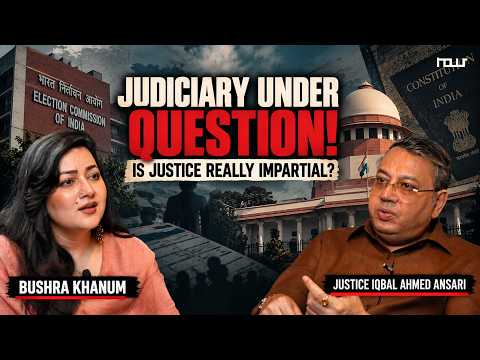 1:13:08
How independent is the judiciary in India today? And what happens when citizens begin to lose confidence in the institutions meant to protect their rights?
 2:44:36
In this conversation, Dr. Harish S. Wankhede joins Ali Javed to examine the political and cultural legacy of Dr. B.R. Ambedkar and the evolution of the Dalit movement. They discuss how Ambedkar imagined Dalits as political subjects at a time when they were denied even basic human dignity, and how…
Discussion
0Readers only · Comments are reviewed by the desk before they appear
The journalism is free for everyone — create a free account to join the discussion.