

Beaten for Being Muslim: Two Journalist Sisters Take On the Delhi Police
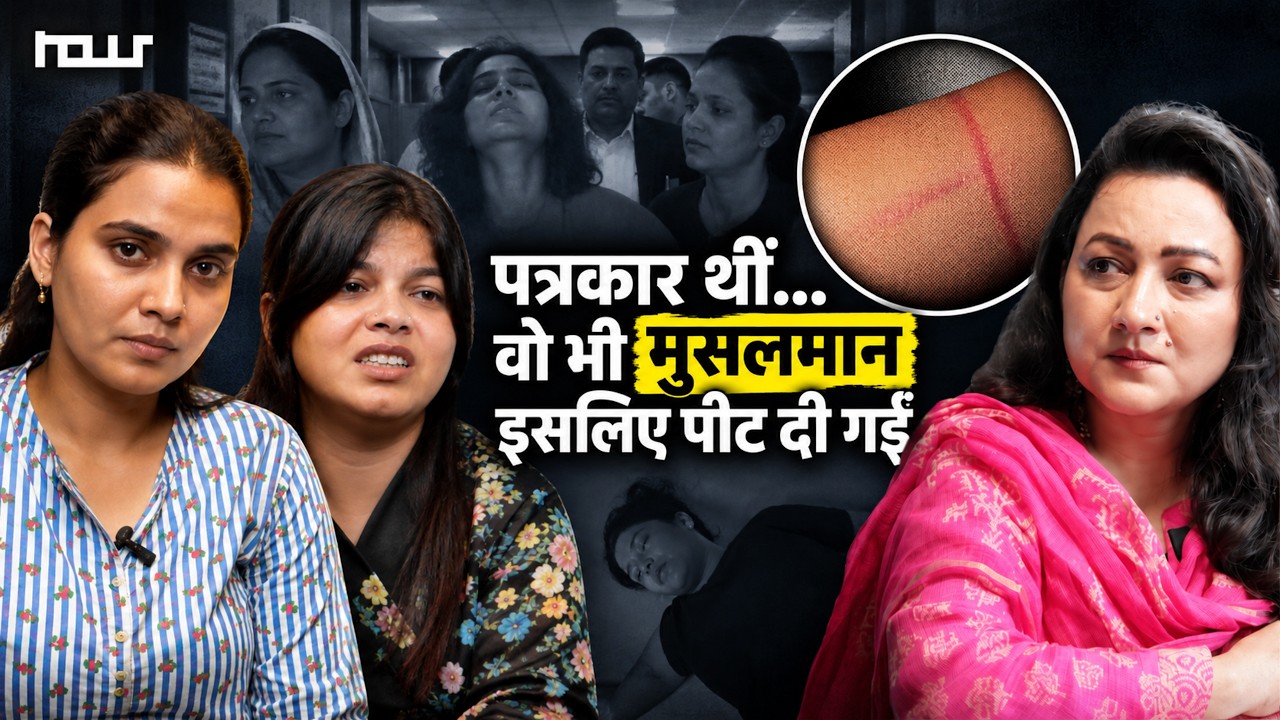
Shaheen Khan and Nafeesa Khan say officers at a Delhi police station stripped them of their phone, dragged them upstairs and beat them with a baton after spotting a caller ID that read Mohammad Khan — and three days later, still no FIR has been filed.
Contents · 11 sections
An Afternoon Near a VIP Convoy
On September 3, journalist Shaheen Khan and her younger sister Nafeesa Khan were riding home on a scooter through south Delhi's Malviya Nagar after a workout when they noticed something odd: their neighbourhood, usually choked with encroachments and potholed lanes, had been swept clean overnight. Asking around, Shaheen learned why. Union Home Minister Amit Shah and the Delhi Chief Minister were arriving nearby to inaugurate a private hospital.
As a local resident and a working journalist, Shaheen said she felt within her rights to ask an obvious question: why was a private hospital getting VIP treatment while government hospitals in the same area stayed neglected. She stopped near a cutout marking the inauguration and recorded a short video raising that question, and, referencing a recent case of a schoolgirl assaulted on a moving bus, about women's safety more broadly. "But who will answer for the state of government hospitals?" she asked on camera.
Police personnel near the venue were cooperative at first, she said, even encouraging her to go ahead once she identified herself as a journalist. But as the sisters rode off, officers stopped them again, this time trying to snatch Shaheen's phone. The sisters refused, insisting they were causing no disturbance and were simply making their way home.
A Ride to Nowhere
What followed, in the sisters' account, was a forced detention dressed up as a courtesy. Female constables pulled at their arms and legs, wrestled Shaheen's phone away, and pushed both women into a police vehicle. When the sisters protested that their scooter was parked nearby and they only wanted to walk home, officers assured them they were being escorted to their doorstep in the interest of their own safety.
The van did not stop at their house. It drove past the turning for their home and kept going, past their own neighbourhood police jurisdiction, until it pulled up at Saket Police Station — some distance from where they lived. Still without a clear idea of what they were accused of, the sisters say they chose to cooperate, believing a formal questioning would end with them being sent home.
Threats at the Reception
At the station, the first demand was for their phone's passcode. Shaheen refused, asking under what law or authority they were being made to hand it over. Officers then told them to wait in what she described as a lock-up room; the sisters refused that too, saying they were not criminals. Soon after, the officer in charge of the station — named in the sisters' account as Dinesh Kumar — arrived.
Shaheen said the officer looked them up and down with open aggression before threatening to file so many sections against them that "no one will be able to save you," accusing them of obstructing police work. Repeatedly, she said, officers invoked one word to justify what followed: power. "We have power," she recalled being told, "the biggest power there is."
Other officers mocked their profession while threatening them, the sisters said, asking sarcastically whether they even knew the alphabet of journalism. At one point, Shaheen said, an officer sneered that she was acting like sprinter P.T. Usha — a jab, she said, at a woman she considers an icon of women's empowerment, twisted into an insult rather than a compliment.
The Caller ID That Changed Everything
Within seconds of the phone being physically wrested from Shaheen's hand, an officer slapped Nafeesa. Shaheen described it as the most painful moment of the ordeal — watching her younger sister struck inside what she called "the safest place for any citizen," a police station, for a reason neither of them could identify.
The turning point, by the sisters' telling, came moments later. As the seized phone sat momentarily unattended, an incoming call lit up the screen — from a contact saved as Mohammad Khan. The officer's demeanour changed instantly. "She's Muslim? Then I'll hit her more," Shaheen recalled the officer saying, before intensifying the assault and directing constables to join in.
Nafeesa, being beaten at the same time, said she answered back even as the blows landed: "Yes, I am Muslim. Is that a crime?" she recalled telling the officer, adding that religion should have no bearing on how a police officer treats any citizen.
Dragged Up the Stairs, Beaten With a Baton
From the reception area, the sisters say they were dragged toward a staircase and up to a room on an upper floor. Shaheen briefly broke free from the officers' grip and ran, in tears, into the room of the station's senior officer, pleading for help — an appeal she says was met with indifference. She was pulled back out and the beating resumed.
Inside the upstairs room, according to the sisters, the assault continued for roughly half an hour: slaps, kicks, hair-pulling, and their heads pushed against the back of a sofa. An officer sent for a baton from outside the room and used it on both women, including a blow to Shaheen's leg that left her, in her words, writhing like a fish out of water. Throughout, Shaheen said she kept repeating one line: "You're beating me because you identified me as Muslim."
When the sisters asked for water, citing breathlessness and pain, they say they were told, "I'll make you die thirsty." Shaheen said she invoked the Constitution directly in the room, telling the officer that no oath of office permitted this: "The Constitution does not permit this," she recalled saying, over and over, even as the blows continued.
An Apology Offered, and Refused
Once the beating stopped, the sisters say the station's senior officer returned, calling them "beta" and offering tea and cold drinks, as though nothing had happened. Shaheen said she refused the gesture, pointing to the fact that identical politeness had been unavailable minutes earlier, when they were begging for water while being beaten for their religion. Confronted directly, the officer, in Shaheen's account, offered a version of an admission: "We admit the mistake."
The sisters say no medical aid was offered despite Nafeesa's visible distress, and that they were denied access to a phone to inform their family for some time. By the time they reached the reception area to leave, Nafeesa collapsed. Shaheen described half-carrying her down the same staircase, saying the two effectively rescued themselves from a police station where, as she put it, they had been unlawfully confined.
Still Waiting for an FIR
Three days after the incident, and by the time this conversation was recorded, no First Information Report had been registered against any officer involved, the sisters said. They alleged that the Delhi Police had instead put out and later deleted social media posts suggesting the sisters had violated a VIP protocol — a claim neither sister accepts.
Their demands are specific: registration of an FIR, and suspension of the officers involved, including the senior officer they identified as Dinesh Kumar and the officer who allegedly led the assault after seeing the caller ID. Shaheen addressed the Delhi Police Commissioner directly, saying she respected due process but wanted an answer to a simple question — what law permitted her illegal detention and assault. She also called on the Delhi Chief Minister and Home Minister Amit Shah to respond, and appealed to Prime Minister Narendra Modi to turn his Independence Day rhetoric of "sabka saath, sabka vikas, sabka vishwas" into visible action for Muslim citizens.
Calling on the Opposition
Both sisters framed part of their resolve around opposition leaders. Shaheen said Rahul Gandhi's "darr mat" — don't be afraid — has stayed with her since she first heard it as a young journalist, and said she expects him to publicly back their demand for an FIR. Nafeesa invoked Priyanka Gandhi Vadra's slogan, "ladki hoon, lad sakti hoon" — I am a girl, I can fight — and appealed to her directly for support.
The sisters said Congress MP Imran Pratapgarhi had personally assured them of support through the party's minority-affairs wing, and noted that women MPs including Mahua Moitra and Iqra Hasan had reached out in solidarity. At the same time, they pointedly criticised prominent women in the ruling party — naming Smriti Irani and Kangana Ranaut — and television anchors known for hosting debates on women's issues, for staying silent on the assault despite the case drawing coverage from Indian and international outlets alike.
Not the First Time
Shaheen said this was not the first time her name had drawn hostility while she was reporting. Early in her career, she said, she was surrounded more than once at different sites across Delhi and told to go to Pakistan because of her name — incidents she said involved self-styled supporters of Hindu right-wing groups rather than the police, and which she also refused to back down from at the time. She said the reaction to those earlier episodes is part of why she felt no fear speaking up now.
Since the video of the assault went viral, the sisters said, they have received support from across the country and abroad, including from journalists, lawyers, and members of the public who had no prior connection to them. Alongside that support, they said, has come a stream of comments claiming the beating was deserved and should have been worse — a response Shaheen said only confirms what she believes their case exposed about prejudice within institutions meant to be neutral.
A Familiar Pattern
The sisters situated their own experience within a longer list of names. They cited journalist Siddique Kappan, jailed for years while on his way to report a story; and student activists Umar Khalid, Sharjeel Imam and Gulfisha Fatima, held for years without trial. They also invoked Bilkis Bano's case to question what justice for Muslim women means in practice, arguing that laws such as the ban on triple talaq are cited by the government as proof of concern for Muslim women even as cases like theirs struggle to get an FIR registered.
Shaheen said the question that stayed with her through the assault was not really about her body. "Would this have happened," she asked, "if the name on the screen had been Pooja, or Sheela, or Deeksha instead of Mohammad Khan?"
We Will Not Hide Our Names
Both sisters credited their parents — who live outside Delhi and did not know the full extent of what had happened when they called — for the resolve they showed inside the police station. Their father, they said, has always called them "beta" rather than "beti," and their mother, whom Shaheen described as not formally well-educated, has long told her daughters they are the children of a lioness. Their brother stayed by Shaheen's side throughout the three days that followed.
Shaheen has worked as a journalist for close to three years, most recently with the outlet 4PM News Network, whose owner Sanjay Sharma publicly backed her at a press conference after the assault. She said she has since moved on from that organisation and now works independently, running a YouTube news channel called Aman Sandesh. She recalled that her first widely shared report, filed in tears, covered a fire at an illegal hotel in her own neighbourhood in which 23 people died — a story she believes is why officers at Saket recognised her as "that journalist who asks too many questions."
Describing the moment she was struck for being Muslim, Shaheen said two competing voices ran through her head: one urging her to feel afraid, the other recalling the history of Muslim sacrifice in India's freedom struggle. "We didn't hide our identity yesterday, nor will we hide it today," she said, adding that the Constitution, not fear, would decide how she responds. The conversation closed with both sisters, and their host, repeating together: "Jai Samvidhan" — hail the Constitution.



Discussion
0Readers only · Comments are reviewed by the desk before they appear
The journalism is free for everyone — create a free account to join the discussion.