

Aakar Patel: Modi's Weakest Moment Yet, and Why Hindutva Can Never Declare Victory
Author and former Amnesty International India chair Aakar Patel argues that a leaderless Gen Z revolt, a forced ministerial resignation, and the demographic impossibility of a legally declared Hindu Rashtra together mark the most vulnerable moment of Narendra Modi's twelve years in power — even as he accuses the opposition of failing to give India's Muslims any political voice of their own.
Contents · 9 sections
- A weakest point, by his own reading
- Twelve years is a long time to hide behind promises
- A generational shift, not a mood that will pass
- Belief, not a means to an end
- Why a declared Hindu Rashtra cannot actually be built
- Success measured in exclusion
- The opposition's own silence on Muslims
- A country that cannot yet build a footpath
- After Modi: the RSS waits its turn

A weakest point, by his own reading
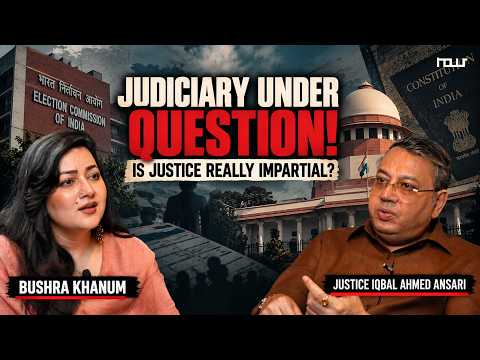
Speaking on the Nous Podcast with host Bushra Khanam Fahad, Aakar Patel was asked directly about the young, largely leaderless protest that had gathered at Delhi's Jantar Mantar over the NEET medical entrance examination — a demonstration whose energy and vocabulary, participants said, belonged unmistakably to Generation Z. Patel agreed with the premise put to him: this is Narendra Modi's weakest political moment. He was careful to explain why. It is not that Modi has faced no trouble before — the 2024 general election cost the Bharatiya Janata Party its parliamentary majority outright. But through that setback, Patel said, Modi's personal image stayed intact. What changed at Jantar Mantar was the register of the anger: young people, many from the middle-class and upper-middle-class Hindu households that have traditionally voted BJP, used a contempt for Modi that, in Patel's account, simply had no precedent in independent India's treatment of a sitting prime minister.
He pushed back, however, on the idea that the Rashtriya Swayamsevak Sangh is quietly auditioning a replacement for Modi. Modi's authority, Patel argued, was never borrowed from the RSS — it flows from his own popularity, making him arguably the only BJP leader whose stature exceeds the organisation's, even though he trained decades ago under Madhukar Rao Bhagwat, the father of current RSS chief Mohan Bhagwat. Patel's expectation is structural rather than personal: the RSS will reassert itself once Modi eventually departs, not while he remains in office.
Twelve years is a long time to hide behind promises
Asked whether this moment was passing or durable, Patel argued for durability, offering two reasons. The first was almost literary: he invoked Ralph Waldo Emerson's observation that every hero becomes a bore at last, suggesting that a public figure who dominates the screen for as long as Modi has will eventually exhaust even sympathetic audiences. The second was more concrete. Twelve years in the highest office, Patel said, is simply a very long time to have held power, long enough that a leader's record becomes impossible to conceal. He offered pointed comparisons: Adolf Hitler became German chancellor in 1933, and within twelve years had built the autobahns, invaded France, attacked the Soviet Union, and been defeated; Jawaharlal Nehru's twelve years from 1947 produced the scientific, cultural and educational institutions that still stand today. Modi, by contrast, governed through two Lok Sabha terms with outright majorities — 303 seats in one, 282 in the other — and Patel's question was blunt: after that much time and that much power, what was actually built? Entering a thirteenth year still promising future delivery, he said, no longer persuades.
A generational shift, not a mood that will pass
Patel's reading of the protest itself went beyond the exam system that ostensibly triggered it. In his view, the demonstration was never really about NEET — it was about a generation that believes it has no future, and that sentiment, sustained across a country of India's size, guarantees continuing trouble for any prime minister. He drew a line connecting this protest to the farm-law agitation and the CAA-NRC movement, identifying a common pattern: whenever large numbers mobilise in India — Muslim women leading the CAA-NRC protests of 2019-20, Sikh farmers at the front of the farm-law agitation, or young people now — the government has been forced to retreat.
What made this moment different, he argued, was that for the first time the government accepted the principle of accountability rather than simply reversing a policy. The resignation of Union minister Dharmendra Pradhan, in office since 2014 and no minor figure, was the marker. Because Modi has cultivated the image of a singular, almost regal authority — Patel paraphrased Modi's own boast that his 56-inch chest belongs to him alone, not to his ministers — forcibly dropping a loyal minister lands as a wound to that persona in a way the farm-law and CAA climbdowns never did.
Underneath both developments, Patel located a broader collapse of fear — the currency, he said, on which Modi's, the BJP's and the RSS's politics have always run: fear used to silence people, to jail them, to make questions and accountability disappear. He described this as a sudden generational shift rather than a slow build-up, rooted in a simple asymmetry of patience: India has lived with deep poverty for centuries without revolution, but this generation, he said, is not willing to wait the way earlier ones did.
Belief, not a means to an end
Asked whether the same shift might extend to how the state treats Muslims, Patel was less certain — but he was unambiguous that the government's Hindutva agenda itself is not going anywhere, because for the BJP, and for Modi specifically, Hindutva is not a means to power but a conviction held sincerely. He traced this to the 1920s framing associated with V.D. Savarkar, under which those who do not regard India as their holy land are not considered authentically Hindu or Indian — meaning Christians and Muslims, regardless of how they actually practise their faith, are treated as suspects whose real loyalty lies with Mecca, Jerusalem or the Pope.
Patel noted that even sympathetic economists would not claim the BJP's record is one of unqualified economic success — not even, he said, Surjit Bhalla, who served on Modi's own Economic Advisory Council. Yet the base remains fully satisfied, he argued, because of the communal agenda actually delivered since 2014 — cow-slaughter laws from around 2015 and, in 2018, the first “love jihad” laws. That satisfaction, rooted in conviction rather than results, is why he does not expect the agenda to be abandoned.
The host raised Mohan Bhagwat's remarks in New York, where the RSS chief reportedly said that Hindus who want Muslims excluded from India are not truly Hindu. Patel read this not as any ideological shift but as an inferiority complex seeking Western validation — a need for the West to certify India as a genuine republic and a vishwaguru. Abroad, he said, RSS leaders cannot admit to bulldozing Muslim-owned shops, to excluding Muslims through the CAA, or to the ongoing Special Intensive Revision targeting Muslim names on voter rolls, so they borrow the language of Gandhi and Nehru overseas while venerating Savarkar at home. He called it hypocrisy born of a lack of confidence to state their real position — noting that Bhagwat spoke in English, a language choice aimed at foreign correspondents and diplomatic missions who file honest reports home, rather than at the domestic audience that actually attended the rally.
Why a declared Hindu Rashtra cannot actually be built
Pressed on whether Hindutva as a project has failed, given how much justification it still requires abroad after a century, Patel offered a more layered answer: the ideology has failed in one sense and succeeded in another. He noted that until 2008, the world's only constitutionally Hindu state was Nepal, and explained precisely what made it one — executive power vested in a Kshatriya king drawn from regional royal dynasties, and a Brahmin royal priest at his court instructing him per the classical Smritis. Notably, he pointed out, even Nepal's laws never went so far as to bar Shudras from reading and writing, or women from working — provisions the Smritis do contain but that, in his words, simply could not survive in the world of 2026 either.
He drew a parallel to Pakistan and Iran. Iran, he said, is the region's only true theocracy because Twelver Shia theology supplies a single vertical clerical hierarchy — a Grand Ayatollah at the apex, junior ayatollahs beneath — from which the state's laws can be derived. Pakistan tried something similar but could not replicate it, because its population, like India's, is too diverse: mostly Sunni, but internally divided, with no equivalent single hierarchy topped by one figure the way Iran has its Supreme Leader. As a result, Pakistan's actual legal codes — the criminal sections a resident of Lahore, Karachi, Dhaka or Peshawar would instantly recognise — remain essentially unchanged from a shared colonial-era framework a century and a half old.
This, Patel said, is the RSS's real dilemma: once in power, how do you legally construct a Hindu Rashtra? He recalled Subramanian Swamy once proposing outright disenfranchisement of Muslim voters — an idea he sees echoed today, on a smaller scale, in the Special Intensive Revision of electoral rolls, though not carried to Swamy's absolute conclusion. The obstacle, in Patel's framing, is demographic: India's greatest asset and the RSS's greatest liability is the sheer size of its religious minorities. Jews made up under one percent of Germany's population in 1930; India has 200 million Muslims. Damaging so vast a share of the nation, he argued, damages the nation itself, which means persecution can only ever be partial rather than total. That is precisely why, in his account, this is failure — a truly pure Hindu Rashtra cannot be built.
Yet he insisted that this failure is treated internally as success, because the goal was never a finished constitutional product but a permanent state of pressure on Muslims. Asked whether describing India as already a Hindu Rashtra awaiting only formal declaration was an exaggeration, Patel said no further stage was coming — persecution would simply rise or fall in intensity, but this already is what a Hindu Rashtra looks like in practice. What it is not, he insisted, is a constitutional fact: Pakistan's law bars any non-Muslim from becoming president or prime minister; Nepal's constitution required a Kshatriya king. India has no comparable clause, and no candidate anyone could point to as the throne's occupant. Calling India a Hindu Rashtra today, he said, is a belief — a “maanyata” — not something real in a legal sense.
Success measured in exclusion
Patel located the evidence of that ongoing project not in constitutional text but in representation. He pointed out that the Union Cabinet currently has no Muslim member, and that across the BJP's last three Lok Sabha totals — 303 seats, 282 seats, and the current 240 — not one of the party's members of parliament has been Muslim. He added that of the BJP's roughly ninety-five Rajya Sabha members, and roughly one thousand state-level MLAs, none are Muslim either. This, in his telling, is the operative meaning of Hindu Rashtra: not a single declared theocratic structure, but a continuous, absolute exclusion from institutional power, paired with a steady stream of laws and policies aimed at narrowing what Muslims can eat, whom they can love, and whom they can marry. Success, in this frame, is measured by how relentlessly that persecution continues — not by any final constitutional milestone.
The opposition's own silence on Muslims
The host pressed Patel on whether this failure of representation belongs to the BJP alone, or whether opposition parties share responsibility — and Patel agreed emphatically that they do. He acknowledged that Dalits and Adivasis face severe, ongoing atrocities, and that opposition leaders do at least raise those issues directly, invoking the Manusmriti and describing the confrontation as an ideological, political war rather than routine electoral competition. Muslims, he said, get no comparable political agency — not even from leaders such as Rahul Gandhi or Akhilesh Yadav, who know large Muslim constituencies vote for them and will continue to. He pointed to the discomfort even at the level of vocabulary, where opposition figures have debated in public whether to say “minorities” or to name Muslims directly.
Patel credited Muslims with a patience since 2014 that, he said, no other community in no other country might have managed to sustain — enduring what he called persecution while remaining largely peaceable. He cited the continued detention of Umar Khalid and Sharjeel Imam as cases where, in his assessment, imprisonment followed from their religion rather than any proven offence. He described this endurance as a kind of strategic patience, one he does not expect to hold indefinitely, because complete exclusion from political power is not sustainable over the long run. More broadly, he faulted India's institutions — the judiciary, the media, civil society — for failing to build the “fraternity” promised in the Constitution's opening lines, adding that for some of these institutions the failure is not incapacity but simple unwillingness.
A country that cannot yet build a footpath
Patel widened the frame beyond communal politics to argue that this generational reckoning is inseparable from India's broader developmental failures. He pointed to persistent poverty, to viral videos exposing the state of school midday meals and toilets, and to the fact that eighty years after independence, the basic promise of self-rule — that people would gain the power to improve their own lives — remains unmet for most citizens. Even something as modest as a properly built footpath, he said, eludes India at scale, while cities such as Bengaluru build multiple airports serving the wealthy, leaving those who cycle, take the bus or walk with infrastructure built for someone else's country. This failure, spanning generations of Indian leadership and not confined to communalism alone, is in Patel's account precisely what has produced the impatience now visible on the streets — a generation unwilling to accept that its life should look like its parents' did.
After Modi: the RSS waits its turn
On what comes next politically, Patel declined to forecast with confidence, noting he did not expect the BJP to lose its majority in 2024 either. He observed that some parts of India, such as Gujarat since the demolition of the Babri Masjid, have effectively become one-party systems that could persist regardless of national mood, even as he allowed that BJP dominance elsewhere could plausibly end. What he was more confident about was a change in political style rather than necessarily in which party governs: the grand promises of a “developed nation” or a global superpower by a fixed date are likely to give way to narrower, targeted delivery aimed at retaining specific support bases, and he suggested — citing Bhagwat's New York remarks as one data point — that the communal agenda might cool somewhat, though not disappear, since it is conviction rather than tactic. Cosmetic change, he predicted, is likelier than substantive change: at seventy-five, he said, a leader's core character is not going to shift, even if a more casual public style, aimed at young voters, might well continue.
On succession, Patel distinguished sharply between a person and an institution. Modi will eventually go, one way or another; the RSS, by contrast, has never split in a century, an organisational durability he considers unmatched among Indian political formations. He expects the RSS to visibly assert itself, as it did in the 1990s when it helped settle the contest between Atal Bihari Vajpayee and Lal Krishna Advani, only once Modi departs — not while he remains in office — with a fresh internal contest likely over who among potential successors is more avowedly Hindutvavadi, given that Amit Shah, in Patel's assessment, lacks the independent crowd-pulling popularity Modi commands.
Asked a closing round of rapid-fire questions, Patel offered a compact verdict: Modi's biggest weakness is ego; yes, he expects Modi to contest the 2029 election; the face of the BJP after Modi will be the RSS; Hindutva will survive without Modi; he does not know whether Rahul Gandhi becomes the next prime minister, only that he cannot predict the outcome; and, pressed on whether communalism will eventually end in India, Patel answered simply, yes. Asked how history might eventually write Modi's chapters, he offered the line that closed the conversation: successful at communalism, a failure at development.


Discussion
0Readers only · Comments are reviewed by the desk before they appear
The journalism is free for everyone — create a free account to join the discussion.